Helsinki to Rovaniemi night train: cabins, fares and car transport
Seat, standard cabin, cabin with shower, connecting, nostalgic: what each category actually contains, what it costs by season, and what the night on board is really like.
The Santa Claus Express is sold as an experience. What you actually buy is a specific space in a specific category, at a price that swings by a factor of four depending on the date.
This page does not replay the plane against train argument, which is covered in how to get to Lapland. It explains how the train works, what each cabin contains, and what the night you spend in it is worth.
What follows: the five spaces on board, prices by class and by season, the booking mechanics and their traps for a non-Finnish buyer, car transport, and the one figure that really settles the question, door to door.
Five spaces on board, not two
Guidebooks reduce the offer to "seat or berth". VR actually sells five configurations, and the gap between the two extremes is the gap between an overnight flight in economy and a hotel room.
| Space | What it contains | Washing facilities | Who it suits |
|---|---|---|---|
| Seat | Reclining seats in an open carriage, lighting dimmed but never switched off | Shared, within the carriage | Very tight budgets, off-season journeys |
| Two-berth cabin, lower deck | Two berths of 200 × 75 cm, washbasin, full bedding, two sockets, blackout curtains, in about 3.3 m² | Shower and toilet in the corridor | The best comfort for the money as a pair |
| Two-berth cabin, upper deck | Same berths, plus private shower and toilet, towels provided, a clear view | Private | Couples, travellers with very young children |
| Connecting 2+2 cabins | Two lower-deck cabins joined by a partition that opens | Corridor | Four people who want to stay together |
| Three-berth nostalgic cabin | Older single-deck blue carriages, berths stacked three high | Corridor | Mostly the extra ski-season services |
Two further categories go unmentioned almost everywhere: wheelchair-accessible cabins, and cabins that take pets, including upper-deck ones with a shower.
For both of those, the exact number of spaces per train is published nowhere. An accessible booking therefore goes through VR customer service, never through the booking engine alone, if you want firm confirmation.
Watch the vocabulary too. English-language sites talk about a "family cabin" with four berths; VR describes connecting 2+2 cabins on the lower deck. Both answer the same need, but their position in the train and their access to a shower are not described the same way from one source to the next.
How much does each class cost by season?
VR advertises lead-in fares: a private cabin from €49, from €74 with a shower. Those figures belong to the low season and to dates nobody wants, never to December.
Here are the ranges actually recorded in 2026, one way from Helsinki to Rovaniemi. One thing to hold in mind before you read the table: apart from the seat, these are whole-cabin prices, not per-person prices.
| Class | Low season | December peak | Range across the year |
|---|---|---|---|
| Seat | 24 à 35 € | 35 à 49 € | 24 à 49 € |
| Two-berth cabin, no shower | 49 à 80 € | 80 à 150 € | 49 à 90 € |
| Two-berth cabin, with shower | 74 à 130 € | 130 à 180 € | 74 à 180 € |
| Four-berth cabin | Few public readings by season | 200 à 400 € for the whole cabin | |
The scale of the seasonal swing is documented on one single category. A traveller recorded the cabin with shower at about 74 € per person on a Wednesday in May 2025, and close to 324 € per person on a Saturday in December.
A factor of four on the same product is more than the airlines manage over the same period. An older reading simply put the off-season saving at 20 to 30 € less per ticket than at Christmas.
The rule that follows is simple. The advertised €49 and €74 fares do exist, but you get them by booking several months ahead, on a weekday, outside the school holidays. A few days before departure, only the last cabins at the top price are usually left.
How do you book from the UK without getting caught out?
Tickets are sold on vr.fi or in the VR Matkalla app, in English, with a non-Finnish bank card. VR offers a "show cabin prices" tick box in the search results: it lets you compare dates day by day, and it is the best free tool for finding the right night.
First trap, and the most expensive one. VR no longer sells a single berth in a shared cabin. You buy the whole cabin, at a fixed price whatever the number of occupants, with no concessionary fare and no solo rate.
The direct consequence: the cabin is excellent for two and poor value alone. A solo traveller pays exactly what a couple pays, which changes the sums completely against a single air fare.
Second trap, per person or per cabin. Plenty of blogs quote fares without saying which of the two they are describing. A "€74" per person and a "€74" per cabin are not the same journey, and the gap shows up at the payment screen.
Third trap, rail passes. An Interrail or Eurail pass is accepted, but it does not cover the night: the cabin supplement runs from 39 à 150 € and the seat supplement from 5 à 32,70 €, depending on date and availability.
On this leg alone, in other words, the pass saves you almost nothing. It only earns its place inside a wider European itinerary, where the supplement disappears into the rest.
Fourth trap, the conditions. A long-distance ticket can be changed before the scheduled departure time, for 5.20 € per ticket. If the new train costs more, you pay the difference; if it costs less, the difference is not refunded.
And there is the rule people discover too late: a ticket "activated at a self-service machine" counts as used. From that moment it can no longer be changed or cancelled, even if you never board the train.
On timing, sales open in waves. In 2026, VR was already selling until 25 April 2027. For a December departure, cabins with a shower and four-berth cabins sell out weeks ahead, which forces you to change plan rather than simply pay more.
How does the car-carrier service work?
This is the least known argument for the train and, on some trips, the only one that counts. VR loads vehicles onto the night trains to Lapland: a car space from €39, a motorbike from €29.
Combined with the cheapest cabin, that comes to 88 € to move two people and a car on a quiet date. The space is added as an extra service to a cabin or a seat, including after you have bought the ticket.
Two practical rules. The driver normally loads the vehicle personally, though VR will do it as a paid service; and vehicles over 3 300 kg are not accepted.
On arrival, keys to cars loaded by VR are collected in Rovaniemi from 07:15 to 12:00. So do not plan to be back on the road the minute you step off the train.
What the public pages do not tell you, on the other hand: the full list of loading stations, the size limits, and whether a roof box has to come off. Check those points with VR when you book, not on a blog.
That leaves the real question, which is whether you need the car at all. For a stay built around the town and the village it is useless, see getting around Rovaniemi instead. Car carriage earns its place on a Nordic road trip, or for a family driving up from the south in their own vehicle.
Which train should you take, given your flight time?
Two night trains link Helsinki to Rovaniemi every evening. The P265 departs 19:29, arrives 07:20, a journey of 11 h 51. The later P273 departs 23:13, arrives 10:59, so 11 h 46.
You leave from Helsinki Central and arrive at Rovaniemi station, a few minutes from the centre. Daytime trains exist too, taking 8 h à 8 h 30, but they cost you a whole day instead of a night.
From Helsinki-Vantaa airport, commuter lines I and P reach the central station in about 30 minutes, with no change. Allow 15 to 30 minutes more to get out of the airport, buy something for dinner and find the platform.
The practical rule fits in two lines. Landing before 18:00 leaves ample time for the P265, which puts you down at 07:20 with the whole day ahead of you.
An evening landing forces the P273, easier on the connection but arriving at 10:59, which eats the morning. On a short break that difference is worth half a day of activities, or one visit to Santa Claus Village.
One last precaution, valid every year: VR republishes its timetable season by season and regularly flags changes caused by engineering work. The times above are the 2025-2026 season, so recheck them on vr.fi for your own dates.
What is a night on board actually like?
This is where the brochures are most generous and the reviews most precise. Start with what genuinely works.
Heating. The carriages are heated for a Finnish winter: you travel in a t-shirt or pyjamas, never in a down jacket, whatever the cold outside. No recurring complaint mentions cold cabins or overheating.
Bedding. It is provided and included in the cabin price: sheets, duvet, pillow. Depending on the category and the hour, the bed is already made or folds down yourself, but either way there is no point packing a sleeping bag.
Noise. In a cabin you hear the train, the clicking and the braking, but the partition really does shut out the corridor. Reviews agree on good sleep quality, far better than on an overnight flight.
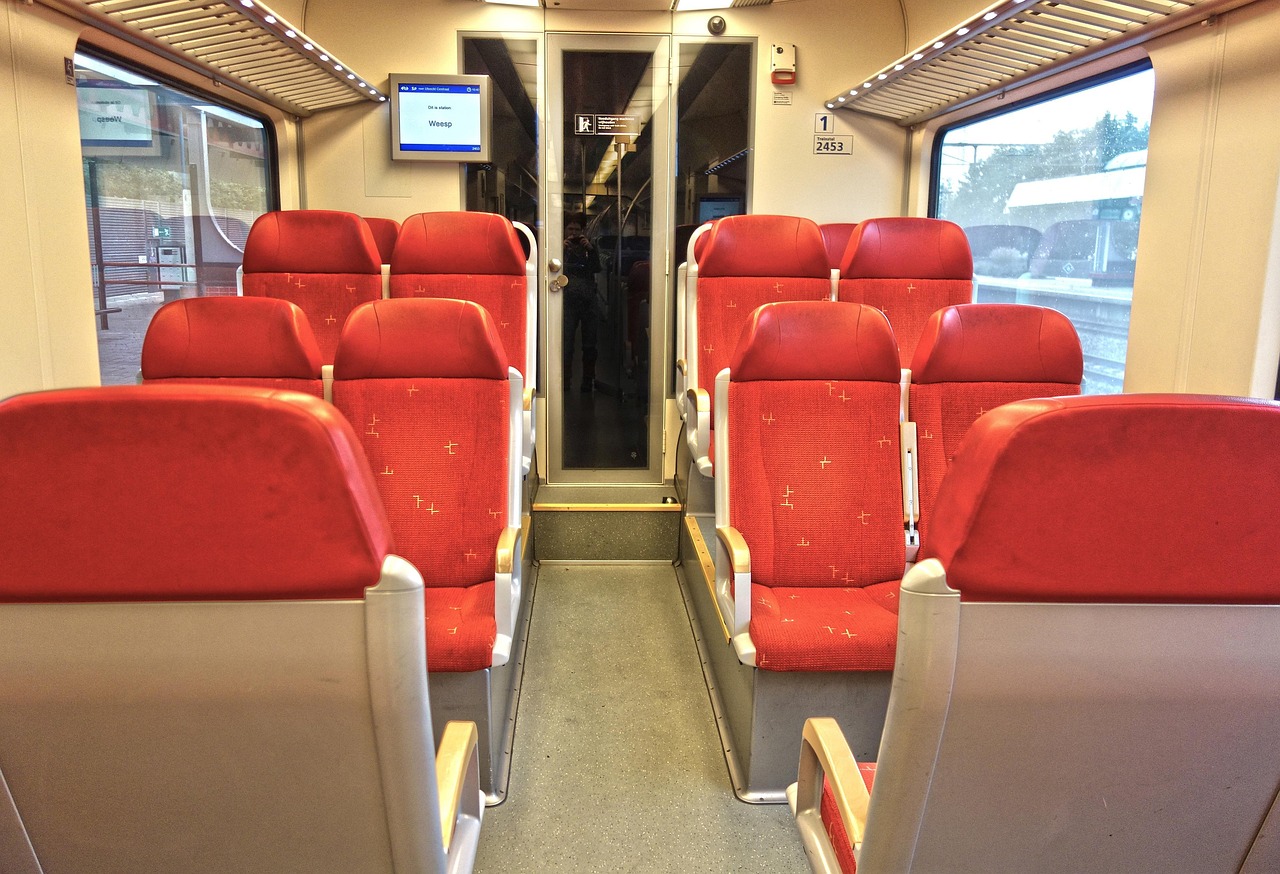
Now for the disappointments. Seats are the first source of regret: several travellers describe them as gruelling over twelve hours, with movement, conversation, announcements and lighting that never fully goes out.
Our position on this is firm. Saving €25 by sleeping upright usually costs you your first day on the ground, the very day the train was meant to hand you. If the budget forces the seat, move the dates rather than sacrifice the arrival.
Wifi is the second letdown. It exists on board, but several reports describe it as slow or unstable, and no speed is guaranteed anywhere. Download what you need beforehand, and do not plan to work seriously.
The 220 V sockets, on the other hand, are genuinely there in the cabins and will charge a phone and a laptop overnight.
Catering deserves a warning. There is a restaurant car and a snack service, but the offer is judged adequate at best, and rarely enough for a whole family. Onboard meal prices are published nowhere.
So the advice travellers repeat most often is to buy sandwiches and drinks in Helsinki before boarding. The central station is well set up for it, and it saves paying a lot for a mediocre dinner at 21:00.
Luggage and skis. Cabins have storage under the beds, and seated carriages have the usual racks. Travelling with skis is routine, but VR publishes no precise size limits: for bulky kit, ask before you buy the ticket.
Door to door, the only number that decides
Everyone compares twelve hours on a train with an hour and twenty minutes in the air. That is the wrong measure: what counts is the time between Helsinki-Vantaa airport and your accommodation in Rovaniemi.
By night train, the full chain runs 30 minutes on the commuter line, 30 minutes to an hour of margin, 11 hr 46 min to 11 hr 51 min on board, then 15 to 30 minutes to reach your accommodation. Total: 13 à 14 h.
By domestic flight, allow about 1 hr 20 min in the air, 1 hr 30 min to 2 hr of check-in, security and waiting, then 30 to 45 minutes of transfer on arrival. Total: 3 h 30 à 4 h.
The raw gap is therefore ten hours. But the train's 13 to 14 hours are spent overnight, when you would have been asleep anyway, while the plane's 3 hr 30 min come out of a usable day.
Recalculated as time genuinely lost, the gap is no longer ten hours but half a day. And you still have to subtract the hotel night the train replaces, which tips the financial comparison the other way.
Arriving at 07:20 changes which first night you book: the P265 drops you well before check-in time at every hotel in Rovaniemi. The question stops being "how many nights" and becomes "who holds my bags at eight in the morning": compare places to stay in Rovaniemi on luggage storage and early arrival before you block out an extra night you will pay for and not use.
See places to stay →Affiliate links: booking through them supports the site at no extra cost to you.The corollary is the train's real benefit, and it is rarely spelled out. Arrival day is a full day: stepping off at 07:20, a morning or afternoon outing fits with room to spare, which a midday flight simply does not allow.
Provided you booked it, of course. Activities in Rovaniemi slot neatly into that arrival-day window, but they are locked in before you leave, not as you step off the platform.
Who is the night train worth it for?
- Two adults, a week or more, outside December: yes, without hesitation. A cabin without shower at 49 à 80 € for two costs less than a hotel night, travel included.
- A family of four: yes, in connecting or four-berth cabins, booked early. The 200 à 400 € compares with four air fares plus a night, not with one fare.
- Solo traveller: bad value. The cabin cannot be shared and its price cannot be divided; the seat is still an option, with the reservations set out above.
- A December departure booked late: often no. At 130 à 180 € for the cabin with shower, and with the best categories sold out, flying becomes competitive again.
- With a vehicle to bring: yes, it is the only sensible way to have your own car in Lapland without driving up from southern Finland.
What the sources do not say
Four blind spots are worth naming rather than filling with an estimate.
The number of cabins of each type per train is published nowhere, and neither is the exact position of the four-berth cabins or their access to washing facilities. We know they exist, not how many there are.
Nor is there any official rule along the lines of "sales open x months ahead". VR opens in waves and simply announces the last date tickets are available for, which means you have to keep watching.
Cancellation conditions specific to night tickets and cabins are not detailed by fare category. Only the change fee of 5.20 € per ticket is clearly documented.
One last point of honesty about the figures on this page. The May and December readings are expressed "per person" by their author, whereas VR sells the whole cabin. Take the factor of four from them, not the two amounts as fares to copy out.
Next, settle your dates with which month to choose and cost the rest of the trip with what a Lapland trip costs.
Sources
VR (vr.fi), the Night trains, Santa Claus Express, To Lapland by train, Car-carrier trains and Customer service pages, consulted in 2026, for cabin categories, lead-in prices, vehicle transport, change fees and ticket conditions of use.
Interrail and Eurail, Santa Claus Express 2026 pages, for the berth and seat supplements that apply to pass holders. Nachtzug.net for the 2025-2026 season timetables of the P265 and the P273.
Traveller reports: prettywildworld (2026) for the ranges by class, emjoyableexplores (2025) for the May against December gap on the same cabin, culturetrekking (2022) for the off-season saving, suomiguide (2026) for cabin fittings. VR prices being dynamic, every amount quoted is a dated reading, never a guaranteed fare.
Frequently asked questions
How much does the Helsinki to Rovaniemi night train cost?
Cabin with a shower or without: which should you take?
Can you book a single berth in a shared cabin?
How long should you allow between landing in Helsinki and the train?
Do you really sleep well on the night train?
Can you take your car on the train to Lapland?

Erik Lindqvist
Based in Rovaniemi, Erik knows the difference between a working reindeer farm and a show staged for coach parties. He writes from the ground, not from a press release.