The Sámi and tourism: homeland, languages and cultural appropriation
Rovaniemi is not in Sámi territory, and in 2018 the Sámi Parliament adopted principles aimed explicitly at tourism that exploits its culture. The figures, the tests to apply, and where to go to meet a living culture.
The Sámi are the only Indigenous people of the European Union. They number 80,000 to 100,000 across four countries, of whom around 10,000 live in Finland.
Theirs is also the most heavily marketed culture in Lapland, and the one with the least say in what is sold in its name. The Sámi Parliament ended up publishing its own rules to try to take back some control.
This page answers three questions in order: who the Sámi are today, why a large share of so-called Sámi experiences are nothing of the kind, and where to go if that culture is what you have come for.
Who are the Sámi, and how many are there?
The Sámi live in the north of Norway, Sweden and Finland, and on the Kola Peninsula in Russia. Their traditional territory has a name of its own, Sápmi, covering around 400,000 km².
Sápmi does not map onto the administrative regions called Lapland. Sámi territory reaches further south in Norway and Sweden, while Finnish Lapland takes in vast areas that lie outside it altogether.
In Finland there are around 10,000 Sámi, living mainly in the northern municipalities but also elsewhere in the country. They are a minority even inside their own homeland.
The Lappi region counts about 1,500 speakers of Sámi languages, against roughly 165,000 Finnish speakers. Our sources refer to “several Sámi languages” without giving a count, so we do not invent one here.
One point to hold onto before anything else: Lapland is not homogeneous, and it is not Sámi. Most of its population is made up of non-Sámi Finns, Swedes, Norwegians and Russians, as our page on where Lapland is sets out.
Where does Sámi territory begin?
The question has a legal answer, and a clear one. Finnish law defines a Sámi homeland, the saamelaisten kotiseutualue, whose boundaries are not open to debate.
It covers Enontekiö, Inari, Utsjoki and northern Sodankylä. There, and only there, do the Sámi hold specific rights: representation, cultural autonomy, language rights.
Rovaniemi is not part of it. The city is the administrative capital of the Lapland region and the country's main tourism hub, but it sits well south of that line, and there is no local Sámi community.
The distinction is not a quibble about wording. It is what explains the central grievance: Sámi folklore sold at scale in a place where no Sámi community exists to contest the form it takes.
Why avoid the word “Lapp”?
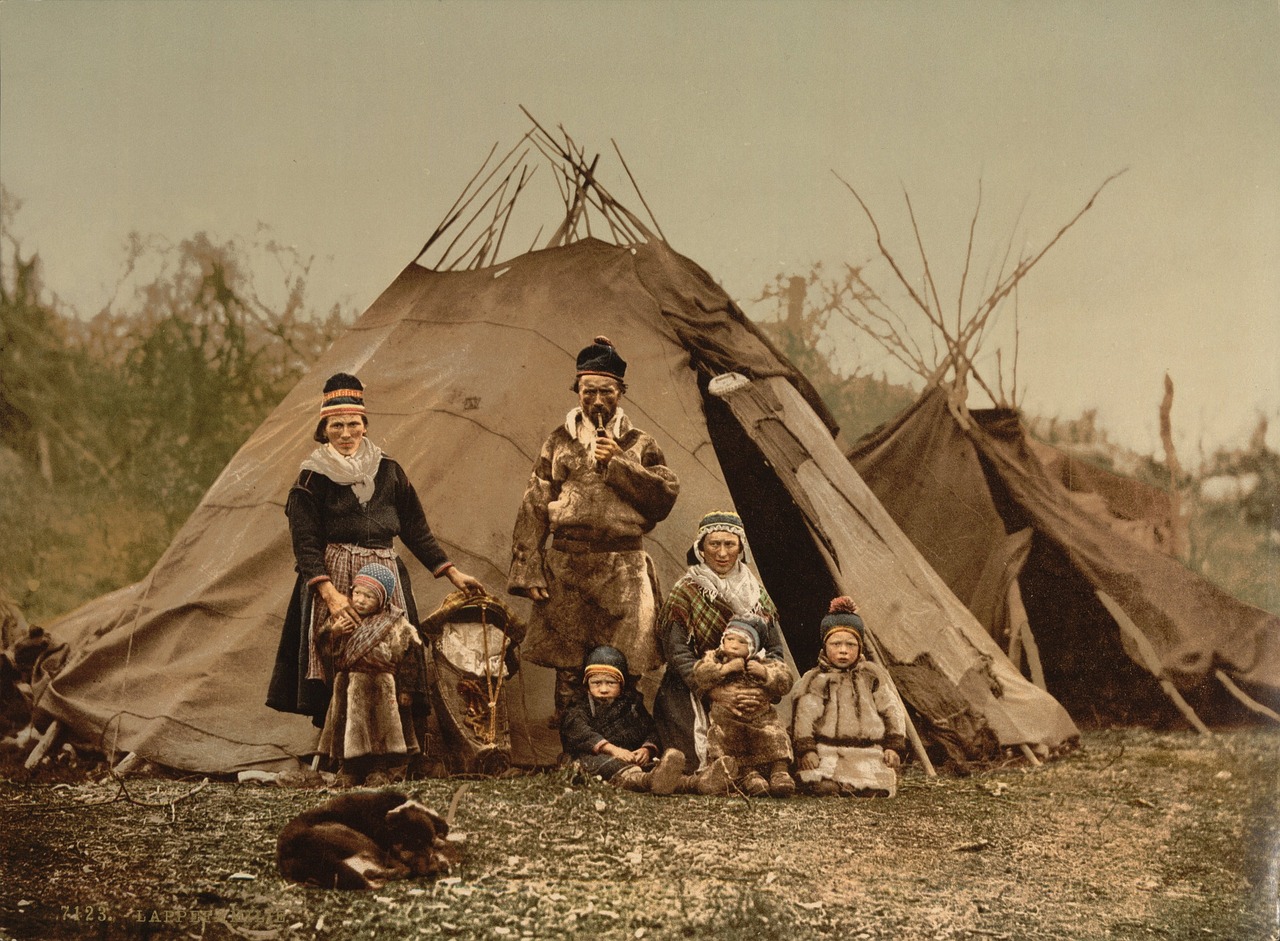
The word “Lapland” breaks down into “Lapp” and the Old Norse land: the land of the Lapps. “Lapp” is a name applied from outside by Scandinavians, what linguists call an exonym.
The etymologies put forward are all unflattering: an Old Swedish word meaning “patch, rag”, a word close to the Finnish lape for the outlying edge of things, or a medieval Germanic term meaning “simpleton”.
It is now widely felt to be offensive, particularly in Norway and Sweden. “Laplander” carries the same problem in English. Contemporary Sámi voices, among them the essayist Petra Laiti, call the words “Lapland” and “lappalainen” racist outright.
The recommended usage is simple and covers every case: “the Sámi” for the people, “Sápmi” for their traditional territory. “Lapland” remains correct for the geographical region and for the administrative regions of the four states.
What the Sámi Parliament can and cannot do
The Sámediggi sits in Inari, in the Sajos cultural centre. The Finnish Constitution of 1999 recognises the right of the Sámi to maintain and develop their language and their culture, and grants them cultural autonomy in their homeland.
That autonomy covers language, education and culture. It comes with no legislative power comparable to a state's, and it creates no border: the Sámi Homeland remains under Finnish law.
The direct consequence for a traveller: the Sámi Parliament can publish recommendations and certifications, but it cannot stop a non-Sámi company from selling a “Sámi village”. That is what the rest of this page is about.
Reindeer herding is a job, not a backdrop
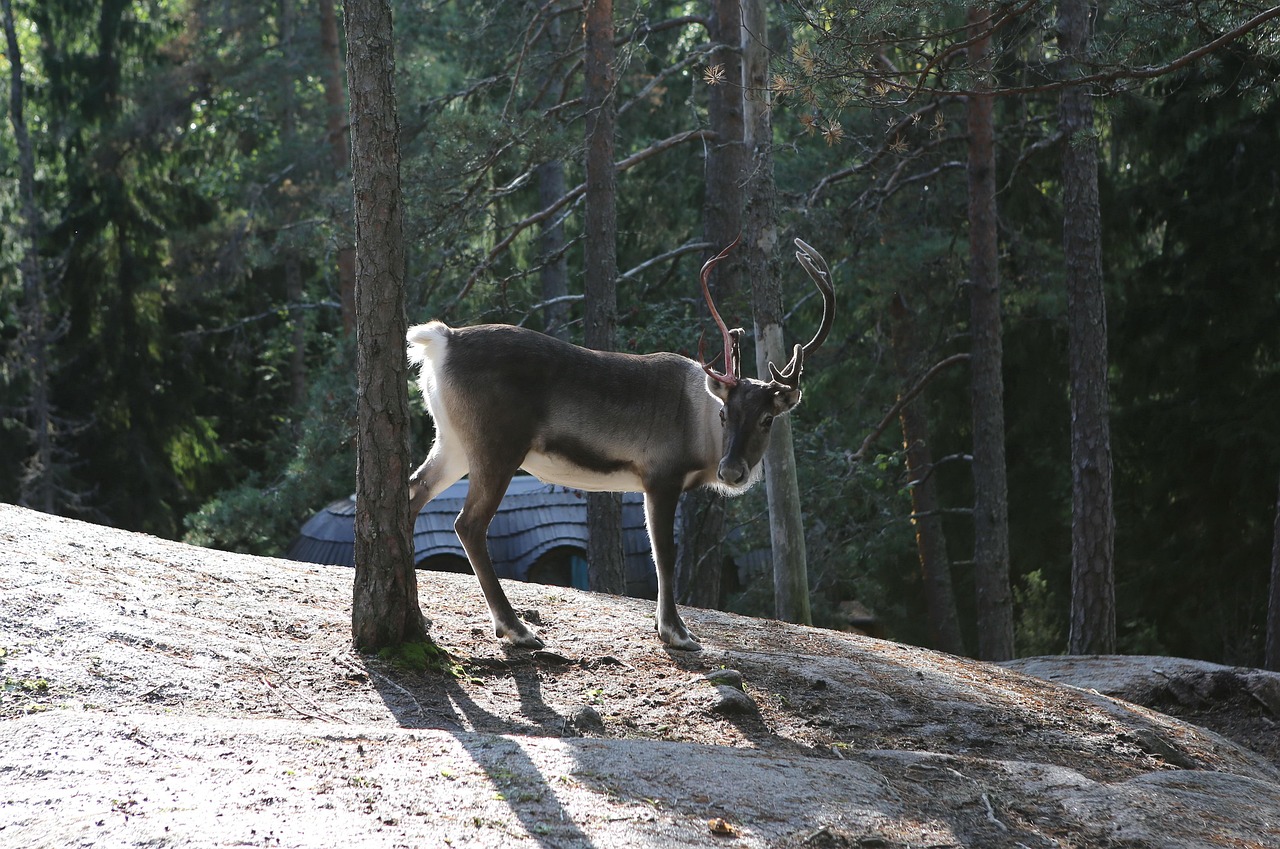
Reindeer herding is the emblematic traditional activity of the Sámi people and a central part of their identity. First and foremost it is a form of production: the animal yields meat, hide and antler.
Herds graze freely over huge areas and are gathered only in autumn and spring, for separation and marking. What a visitor sees is a small group used to people, not the working herd.
The economic reality is more nuanced than the picture postcard. Only a share of Sámi make their living mainly from herding: many are teachers, artists, lawyers or guides, and plenty of families keep a few reindeer for cultural as much as economic reasons.
Tourism does play a growing part in some Sámi herding businesses in Inari and Enontekiö, which combine the herd with hosting, guiding and craft. That model exists, it simply sits far north and is rarely sold out of Rovaniemi.
Two rules apply everywhere in Lapland, and the Sámediggi restates them. Frightening a reindeer is against the law. And you approach a herd only when guided by its owner, which rules out walking up to the one you pass at the roadside.
What the Sámi Parliament holds against tourism
On 24 September 2018 the Sámediggi adopted its principles for responsible and ethically sustainable Sámi tourism. The stated aim of the official text is to put an end to tourism that exploits Sámi culture and to eliminate the false information tourism spreads.
The guidelines name five categories of abuse, and the vocabulary is theirs: cultural identity theft, cultural appropriation, invented traditions, borrowed traditions, and the cluster made up of stereotyping, exoticisation, zoo-ification and primitivisation.
On the traditional dress, the gákti, the rule is explicit. If a person wears Sámi dress in a tourism image, that person must be Sámi, the dress must be authentic, and it must be worn in accordance with Sámi customary law.
Three documented cases, not impressions
- Dress worn by non-Sámi staff. The academic journal Arctic Review noted in 2022 that the Rovaniemi tourism industry has been criticised for putting Sámi clothing on employees who are not Sámi.
- Shamans and witches. Speaking to AFP on 24 December 2019, the president of the Sámi Parliament Tiina Sanila-Aikio explained that visitors ask every day where to see “the Sámi shamans and witches”, an image invented wholesale by the tourism industry.
- The Rovaniemi protest. A report from the European Interact programme, published in 2023, documents a protest by Sámi in Rovaniemi against the use of Sámi clothing, reindeer herding and Sámi culture by non-Sámi tourism companies.
To these add the “Sámi villages” rebuilt for visitors, reported in particular around Rovaniemi and the Santa Claus Village. The guidelines are unambiguous about the format: a Sámi village inside a theme park, run by a non-Sámi company, is a stage set.
In 2025 the subject took on a land dimension. The investigation published in late September by the Guardian with several European media outlets puts at 2.7 million m² the nature lost within 10 km of Rovaniemi and five other tourism hubs, half of it attributable to tourism, with projects on old-growth forest used for reindeer herding.
Borrowed traditions: huskies, igloos and dress
The “borrowed traditions” category covers practices that come from elsewhere but are presented as local. First in line is dog sledding, which is no part of Sámi tradition.
The guidelines judge it particularly problematic where it sets up on reindeer pasture, putting it in direct conflict with a way of life. We deal with the activity on its own terms, and with the state of the kennels, on our page about husky sledding.
The same logic applies to igloo hotels, borrowed from other Arctic regions and criticised by Sámi voices as one more element in a flattened image of the North. That says nothing about the quality of the night, which we cover in our comparison of glass igloos, but it does say what it is not.
What these products have in common is not that they are bad. It is that they are sold with a vocabulary that does not belong to them, and that they leave the visitor believing they have met a culture when they have bought a leisure activity.
How do you recognise a genuinely Sámi experience?
Four tests come out of the Sámediggi guidelines and the responsible tourism guides. All four can be checked in ten minutes on the operator's own website, before you pay.
| Test | Good sign | Warning sign |
|---|---|---|
| Ownership | the business states that it is Sámi, or that it is the farm of a named herding family | no identifiable person, no village named |
| Community ties | family history, language, duodji craft, village life | a standardised show sold out of a big tourist town |
| Content | nothing invented, dress and symbols used in their own context | shamans, witches, a “Sámi village” in a theme park |
| Location | Inari, Enontekiö, Utsjoki, northern Sodankylä | Rovaniemi, Levi and the resorts further south |
For craft, one marker is enough and it is visual: the Sámi Duodji label. It tells a piece made by a Sámi craftsperson apart from an industrial souvenir that borrows the patterns.
The Sámi Parliament also announced in 2025 a responsible Sámi tourism certificate, developed with EU-NextGenerationEU funding. In time it should make this sorting far easier than it is today.
What if you are not going as far as Inari?
That is the usual case, and there is nothing shameful about it. The honest answer fits in one sentence: go and see reindeer, learn what herding involves, and do not call it Sámi culture.
The reindeer farms you can reach from Rovaniemi are Finnish businesses, often family-run, sitting south of the legal boundary. A herding family explaining their work has plenty to tell you, and that on its own is a good reason to go.
See reindeer without buying an identity: the reindeer farm visits from Rovaniemi are Finnish businesses, not Sámi farms. They are good animal encounters, family-friendly and easy to reach, as long as you know what you are buying. Drop any product that presents itself as Sámi, as a Sámi village, or as a meeting with shamans: those three phrasings are precisely the ones the Sámi Parliament condemns.
See the reindeer farms →Affiliate links: booking through them supports the site at no extra cost to you.One very concrete marker on these products: the sleigh ride is most often 400 to 500 m on a closed track, for a programme priced at 70 to 130 € per adult. Farm by farm, with the distances and the prices on record, in our comparison of reindeer farms in Rovaniemi.

Where can you meet a living Sámi culture?
In the Sámi Homeland itself, where the culture is not a product but a daily life. Three ways in, in order of how easily you reach them from Rovaniemi: Inari, Enontekiö, Utsjoki.
Inari is the best documented. The village is home to the Siida museum, devoted to Sámi culture and northern nature, and to the Sajos cultural centre where the Sámi Parliament sits. Both are open to visitors, and it is the logical starting point.
The constraint is distance. Inari lies 320 to 340 km north of Rovaniemi, which rules out a day trip. Plan on a car or a long-distance bus, and at least one night there.
The detour has a side benefit with nothing cultural about it: the Inari area is far darker than the surroundings of Rovaniemi, and aurora viewing conditions there are noticeably better. If you are undecided about your base, compare it with the others on our page about Rovaniemi, Levi or Saariselkä.
For the visit itself, the Sámi Parliament published in 2022 a responsible visitor guide, online and free. It is written for travellers as much as for operators, and it is the source to read before you go, rather than a sales brochure.
Five points of etiquette, from the Sámediggi
- You are a guest in an inhabited cultural landscape, not in a park. Residents' privacy and local customs apply exactly as they would anywhere else.
- Do not frighten reindeer, it is against Finnish law, and approach a herd only when guided by its owner.
- Do not wear Sámi dress and do not buy an imitation. The rule applies to private visitors and to operators alike.
- Respect the seasonal cycles of nature and the needs of herding, particularly during the round-up periods.
- Buy Sámi when you buy: products, services and craft carrying the Sámi Duodji label rather than industrial souvenirs with borrowed patterns.
None of this asks any particular effort. What it mostly asks is that you let go of one received idea: the decorative North, available and empty of inhabitants, that tourism marketing took a century to build.
Sources
Sámi Parliament of Finland (Sámediggi): principles for responsible and ethically sustainable Sámi tourism adopted on 24 September 2018, responsible visitor guide published in 2022, visitor recommendation pages, and the 2025 announcement of a responsible Sámi tourism certificate funded by EU-NextGenerationEU.
Briefing note from the United Nations Office of the High Commissioner for Human Rights on Finland, and Finnish law on the Sámi homeland, for the boundaries of the Sámi Homeland. Finnish Constitution of 1999 for cultural autonomy. Britannica and Wikipedia for the extent of Sápmi, the etymology of “Lapp” and the distribution of the population.
AFP, 24 December 2019, interview with Tiina Sanila-Aikio, then president of the Sámi Parliament. Arctic Review, 2022, on Sámi clothing worn by non-Sámi employees in Rovaniemi. Interact report 2023 for the Rovaniemi protest. Investigation by the Guardian and several European media outlets, late September 2025, for the land dimension.
Doriana Plesa's thesis, University of Lapland, on the appropriation of Sámi culture by tourism. Visit Finland, feature on meeting the Sámi. Regional statistics for Lappi for the number of Sámi language speakers. Data verified in September 2026.
Frequently asked questions
How many Sámi are there today?
Is Rovaniemi part of Sámi territory?
Should you say Sámi or Lapp?
Can you visit a Sámi reindeer farm from Rovaniemi?
Why does the Sámi Parliament criticise tourism?
How can you tell whether a tour is genuinely Sámi?
Where can you see a serious exhibition on Sámi culture?

Camille Rousset
Camille has covered Nordic destinations for ten years. She checks every price and every opening time at the source, and refuses to publish a figure she cannot date.