Where is Lapland? The four countries and how they differ
Lapland is not a country, and the Swedish part is larger than the Finnish one. Where it begins, where the Arctic Circle runs, and what “Lapland” does not mean.
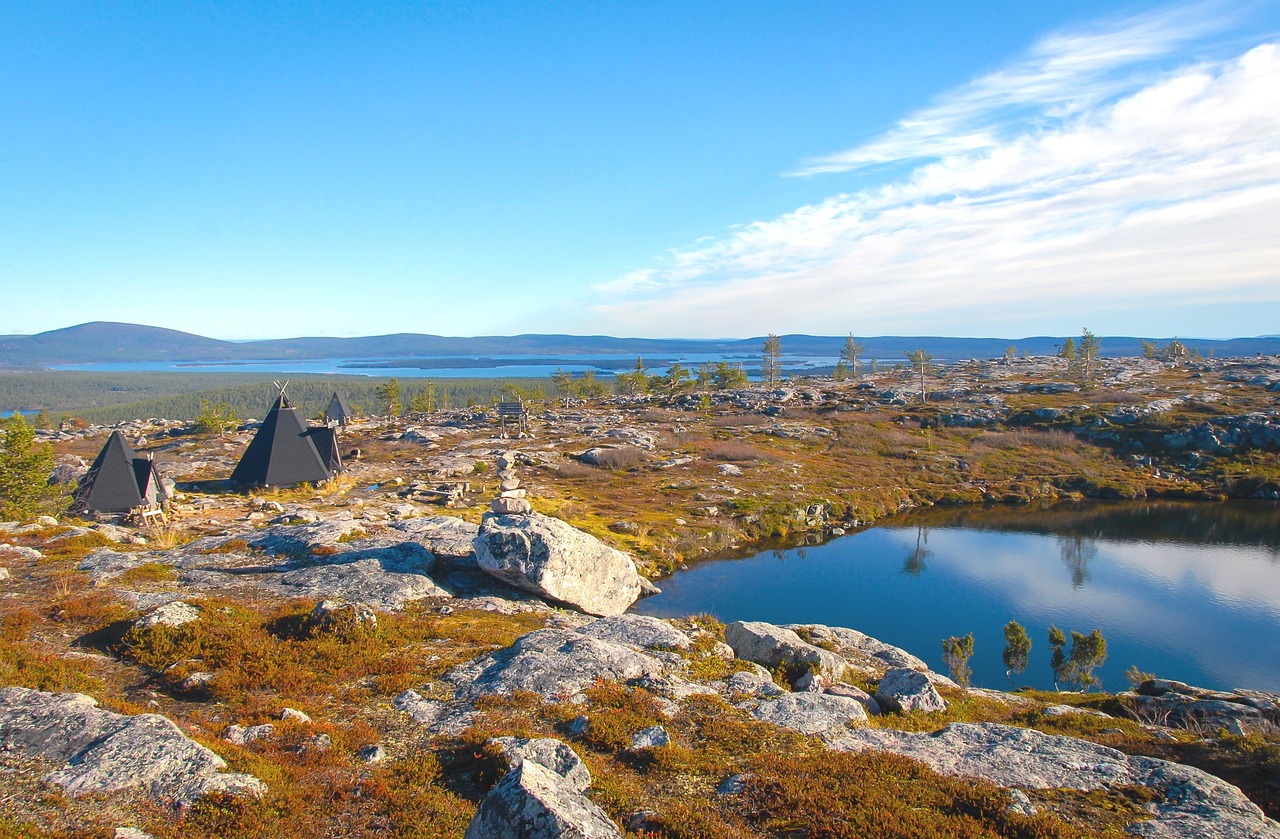
Lapland is not a country. It is a subarctic region shared between four states, with no common government, no border of its own and no passport.
When a British traveller says “Lapland”, they almost always mean Finland, and often Rovaniemi in particular. That is one part of the whole, and not the biggest one.
This page places the region precisely, gives the exact line of the Arctic Circle, explains why that line moves every year, and corrects six ideas that turn up in nearly every guidebook.
The one-sentence answer
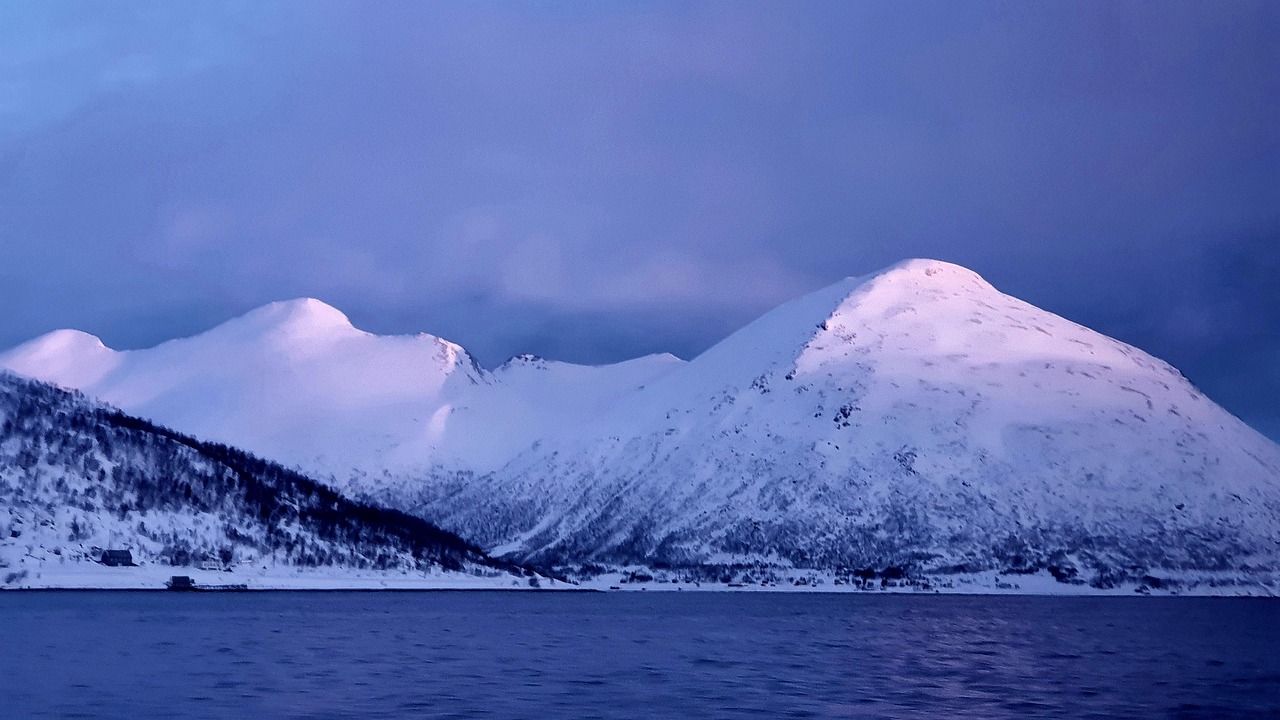
Lapland covers the north of Norway, Sweden and Finland, plus the Kola Peninsula in Russia, mostly around and beyond the Arctic Circle.
Added together, those four portions come to roughly 388,000 km² on the broadest definition, so slightly more than Germany. For around 2.3 million inhabitants, which gives one of the lowest population densities in Europe.
The four Laplands, country by country
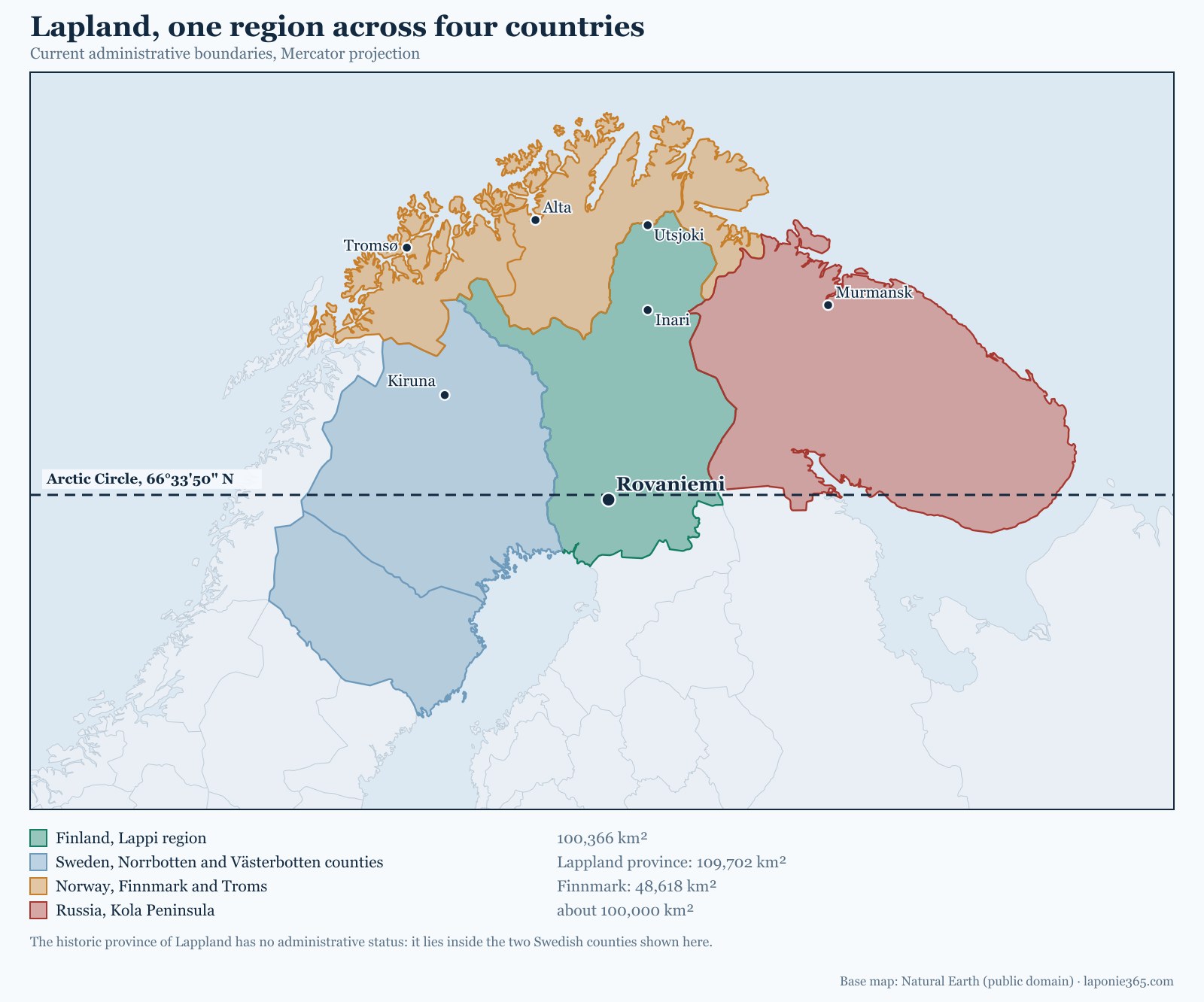
The dotted line is the Arctic Circle, at 66°33'50" N. It runs exactly across Rovaniemi, which explains the city's unusual position: to the south, no polar night at all, to the north, it lengthens day by day.
| Country | Local name | Area | Population | Main city | Currency |
|---|---|---|---|---|---|
| Finland | Lappi | 100,366 km² | 176,215 inhabitants | Rovaniemi | euro |
| Sweden | Lappland | 109,702 km² | 87,744 inhabitants | Kiruna | Swedish krona |
| Norway | Finnmark | 48,618 km² | 75,037 inhabitants | Alta | Norwegian krone |
| Russia | Kola Peninsula | around 100,000 km² | around 750,000 inhabitants | Murmansk | rouble |
The area figures come from Maanmittauslaitos for Finland and from national censuses for the others. The Norwegian and Swedish population counts date from 2023 and 2024, the Finnish one from 2025.
Swedish Lapland is larger than Finnish Lapland
This is the first reflex to correct. The Swedish province of Lappland covers 109,702 km², against 100,366 km² for the Finnish region of Lappi.
If British tourism concentrates on Finland, that is a matter of marketing and flight routes, not geography. Santa Claus Village, which opened in Rovaniemi, fixed the destination in people's minds.
Finnish Lapland is still vast on the scale of its own country: it accounts for almost a third of Finnish territory and around 3% of its population. Density falls to 1.9 inhabitants per square kilometre.
Rovaniemi, its administrative capital, has about 66,000 inhabitants. That is about the size of Scarborough or Taunton, with a municipal area the size of an English county.
Where exactly does the Arctic Circle run?
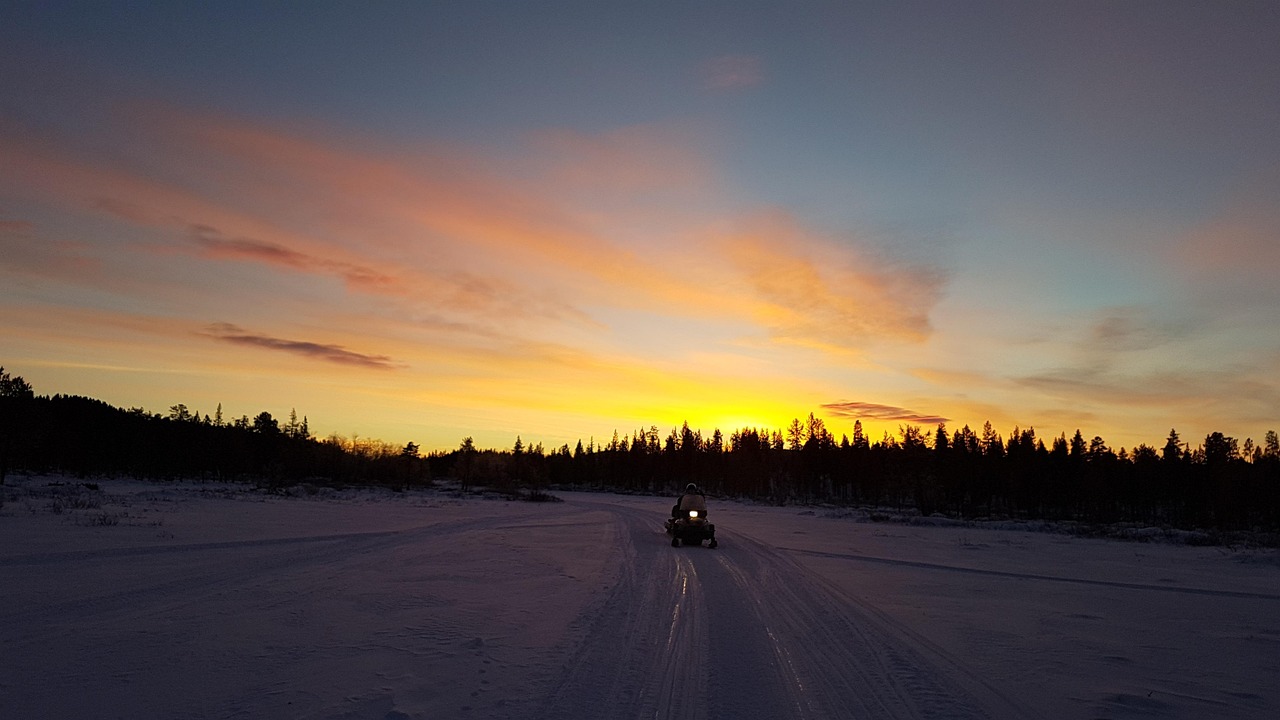
The Arctic Circle is not an arbitrary convention. It is the latitude north of which the sun fails to rise on at least one day a year, and fails to set on at least one day too.
Its position is calculated from the tilt of the Earth's axis, which currently places it at 66°33'50" N. In Finland, the line crosses the municipality of Rovaniemi.
The town centre sits at 66°30' N, so slightly south of the circle. Santa Claus Village, about 8 km further north, is built practically on the parallel, which is why there is a marked line on the ground that every visitor photographs.
The Arctic Circle moves 14 metres north every year
The Earth's axis wobbles on a cycle of roughly 41,000 years, so the tilt changes slowly, so the latitude of the circle changes too. The line drifts north by about 14 to 14.5 metres per year.
In practice, a monument placed on the true line in 1900 now stands nearly 1.7 km south of the real position. The Rovaniemi marking is not reset to the metre every year.
None of this takes anything away from the place, but it is worth knowing: the line painted on the ground is a tourist landmark, not an up-to-date geodetic measurement.
Rovaniemi is further north than Reykjavik
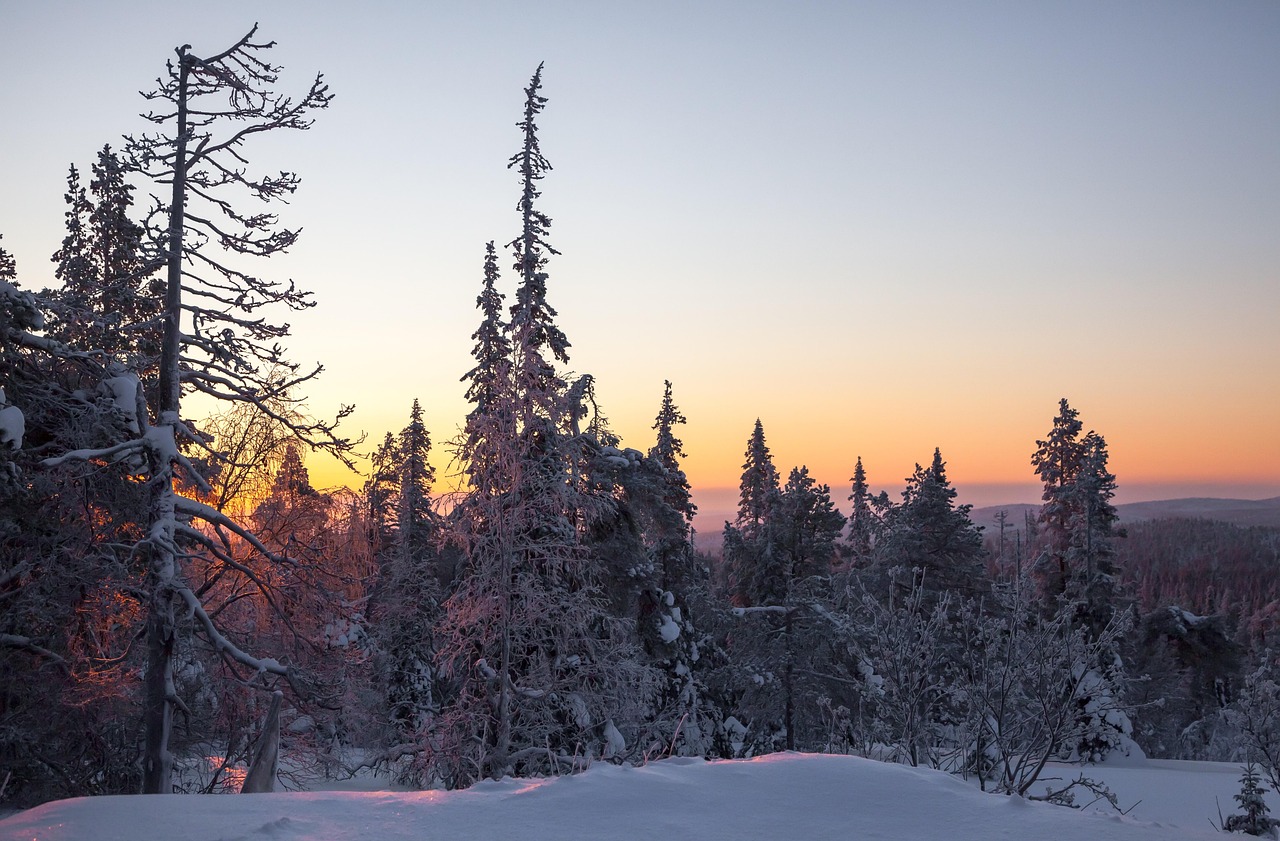
The latitude comparison surprises almost everyone, because Iceland passes for the archetype of the far north.
- Rovaniemi: 66°30' N
- Nuuk, capital of Greenland: 64°10' N
- Reykjavik: 64°08' N
- Anchorage, in Alaska: 61°13' N
So Rovaniemi lies further north than the capital of Greenland and than the capital of Iceland. It is still one of the very few towns at that latitude with an international airport, a university and a direct rail link.
Lapland and Sápmi are not the same thing
“Lapland” names a geographical region and a set of administrative units defined by states. “Sápmi” is the indigenous name for the traditional territory of the Sámi people, which covers around 400,000 km².
The two overlap heavily but do not coincide. Sápmi reaches further south in Norway and Sweden than the regions called Lapland, and conversely administrative Lapland takes in areas that are not Sámi territory.
The distinction has concrete legal consequences. In Finland, the Sámi homeland is defined in law and is limited to the municipalities of Enontekiö, Inari and Utsjoki, plus part of Sodankylä.
In other words, Rovaniemi is not in Sámi territory in the sense of Finnish law. The costumed “Sámi experiences” sold to tourists in the city are commercial folklore, not a local Sámi presence.
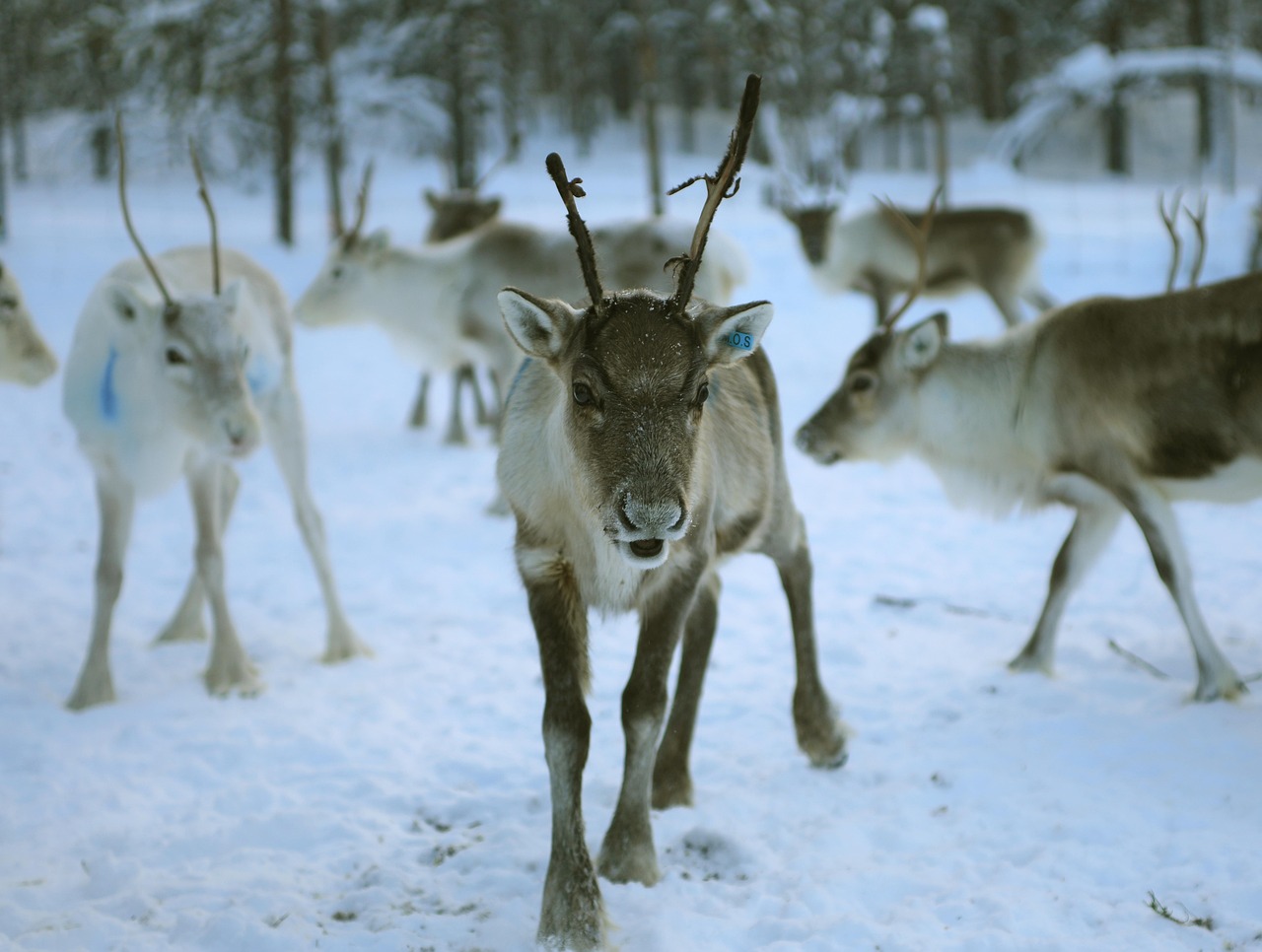
Seeing reindeer without buying folklore: reindeer herding is a real working industry across the whole of Lapland, Sámi or otherwise. The reindeer farm visits around Rovaniemi are run by Finnish herders showing you their trade, which is honest enough, as long as you do not mistake it for a Sámi experience. For that you need to go up to Inari and the Siida museum.
See the reindeer farm visits →Affiliate links: booking through them supports the site at no extra cost to you.Why say Sámi rather than Lapp?
The word “Lapland” comes from “Lapp”, the name Scandinavians used for the Sámi, attached to the Old Norse land. Literally, the land of the Lapps.
The etymologies put forward for “Lapp” are all unflattering: an Old Swedish word meaning “patch, rag”, a Finnish word for the outlying edge of things, or a medieval Germanic term meaning “simpleton”.
It is an exonym, a name imposed from outside, and today it is widely felt to be offensive, particularly in Norway and Sweden. “Laplander” carries the same problem in English. Contemporary Sámi voices call the word racist outright.
The recommended usage is simple. For the people, say Sámi, with the accent. For their traditional territory, say Sápmi. “Lapland” remains correct for the geographical region and for the national administrative units.
Six myths worth correcting
- “Lapland is a country”: no, it is a region shared between four states, with no political status of its own.
- “Lapland means Finland”: the Swedish part is larger, and Norway and Russia each hold a portion.
- “It is dark 24 hours a day all winter”: on the Arctic Circle the polar night lasts only a few days, and the blue kaamos twilight lights the landscape for several hours a day.
- “You can see polar bears there”: no wild polar bear lives in Finland. The nearest are in Svalbard and Greenland. In Finland you will only see one at the Ranua wildlife park.
- “The population is Sámi”: Lapland is mostly populated by non-Sámi Finns, Swedes, Norwegians and Russians. There are 80,000 to 100,000 Sámi spread across the four countries.
- “All of Lapland is Sámi territory”: in Finland only four northern municipalities are so in law, which excludes Rovaniemi and the whole south of the region.
What to know before you go
Finnish Lapland uses the euro. Sweden pays in Swedish kronor, Norway in Norwegian kroner, and the Russian part in roubles, so a trip that crosses borders means juggling currencies.
The time zone is Europe/Helsinki, which is one hour ahead of France, summer and winter alike. From the UK that works out at two hours ahead: when it is 10:00 in London, it is 12:00 in Rovaniemi.
The majority language is Finnish, with about 1,500 speakers of Sámi languages in the region. English is very widely spoken: Finland ranks among the strongest non-English-speaking countries in the world on that measure.
If you settle on Finnish Lapland, most excursions are booked from Rovaniemi, which concentrates the airport, the accommodation and the activity departures. On the Swedish side everything leaves from Kiruna, and on the Norwegian side from Tromsø or Alta.
For the next stage of planning, see which month to choose, the detail of temperatures month by month, the options for getting to Lapland and what a trip really costs.
Sources
Britannica and Wikipedia for the definitions of Lapland and Sápmi. Maanmittauslaitos and Lapin liitto for the area of Finnish Lapland, Statistics Finland and Citypopulation for the populations.
Finnish legislation on the Sámi homeland and documentation from the Sámi Parliament (Sámediggi) for its boundaries. Geodetic studies for the drift of the Arctic Circle. EF English Proficiency Index 2024-2025 for the level of English. Data checked in August 2026.
Frequently asked questions
Is Lapland a country?
Which country holds the largest part of Lapland?
Where does the Arctic Circle run in Rovaniemi?
Should you say Lapp or Sámi?
Is Rovaniemi in Sámi territory?
Are there polar bears in Lapland?
What is the time difference between the UK and Finnish Lapland?
Camille Rousset
Camille has covered Nordic destinations for ten years. She checks every price and every opening time at the source, and refuses to publish a figure she cannot date.