Getting around Rovaniemi: bus, taxi or hire car?
Rovaniemi fits inside eight kilometres. Buses, shuttles, taxis or a hire car: what each option really costs, insurance excess and studded tyres included.
It is the question that comes up before every trip, and almost nobody answers it properly: should you hire a car in Rovaniemi? Guidebooks say "it depends", which helps no one decide.
The answer starts with a fact of geography. The centre, the airport and Santa Claus Village form a triangle less than ten kilometres across, served all year by a municipal bus, two shuttles and taxis at quoted fares.
This page compares every option using prices recorded for 2026, then gives the car a section of its own: what it costs once the insurance excess and parking are added, and the specific cases where it is still essential.
For the journey in from the airport, everything is set out in our comparison of how to get to Lapland. Here we assume your bags are already down.
Rovaniemi fits inside eight kilometres
Before comparing prices, look at the distances. On their own they explain why a car matters less here than anywhere else in Lapland.
| Journey | Distance | Bus or shuttle | Taxi |
|---|---|---|---|
| Centre to Santa Claus Village | about 8 km | Route 8, €3.60, 15 to 25 minutes | 20 to 32 €, 10 to 15 minutes |
| Centre to airport | 8 à 9 km | Airport Express, €7 | 25 to 32 € |
| Airport to Santa Claus Village | 3 km | Santa's Express, €4 one way for adults, €7 return | 20 to 25 € |
| Centre to Apukka Resort | about 10 km | Shuttle included in the activity | 30 to 40 € |
Hold on to that first line: eight kilometres between the centre and the village. In British terms, that is roughly the distance from a town centre to its out-of-town retail park.
Route 8 does almost everything, except evenings
Route 8 on the Linkkari network is the backbone of car-free travel. It links the railway station, the central Ruokasenkatu stop and the Napapiiri stop at Santa Claus Village, all year round.
A single ticket costs €3.60 paid to the driver by card or cash, and €3.30 through the Waltti Mobile app. For a child aged 0 to 16, expect €1.80 on board and 1,65 € in the app.
The 24-hour ticket is €9 for an adult and 4,50 € for a child. It pays for itself on the third journey of the day, which comes round quickly once you do a return trip to the village with a detour into town.
Two useful details: a single ticket allows changes for 60 minutes within the same zone, and a bike or a large item of luggage costs 1.50 € per trip. Pushchairs travel free.
Buses run every 30 to 40 minutes during the weekday daytime and roughly every 60 minutes at weekends. Extra 8C departures thicken the afternoon service 19 October to 23 December 2026 and 7 January to 5 March 2027.
So much for what route 8 does well. What it does not do matters just as much, and this is where most travellers get caught out.
The last return from the Arctic Circle into the centre leaves at 19 h 35 on weekdays and 18 h 05 at weekends. After that there is nothing: no evening service, no night service.
First departures are around 05:50 on weekdays, around 11:15 at weekends. A Saturday morning at Santa Claus Village before eleven therefore means a taxi, or nothing at all.
Tickets are sold on board, in the Waltti Mobile app, or at the machine in the Rinteenkulma shopping centre, Koskikatu 25, second floor. The Osviitta and Matkahuolto service points sell them too.
How much is a taxi, and which app should you use?
The taxi is the only option running 24 hours a day, including on Christmas Day. It is also the only way back from the village after the last bus, or out to it early on a Sunday.
Expect 20 to 32 € per car between the centre and the village, 30 to 40 € out to Apukka, with a surcharge of about 3 € per trip at night and on Sundays. The fare is per vehicle, not per person.
Do the maths for a party of four. Four tickets at €3.60 come to under fifteen euros, a taxi to between €20 and €32. That ten-euro gap buys twenty fewer minutes in the cold, and a drop-off at the door.
On the app side, the reliable names are Menevä, which quotes the fare in advance and dispatches around the clock, Lähitaksi and Taksi Rovaniemi, plus the 02Taksi aggregator that compares the local firms.
On Uber and Bolt the sources flatly contradict each other: some 2025-2026 guides list them as available, while a specialist 2026 guide states that Uber does not operate in Rovaniemi. Do not build your evening around them, book through a local app instead.
Are Airport Express and Santa's Express useful once you are there?
Both shuttles are sold as airport transfers, but they stay useful throughout the trip, because they also cover the run between the centre and the village.
Santa's Express, the red bus, runs from October to March, with fewer stops than route 8 and more daytime departures. The adult return at €4 one way for adults, €7 return works out slightly cheaper than two Linkkari tickets.
Airport Express, the yellow and white bus, runs all year at €7 for an adult and €4 for a child, from 09:00 to 21:30 only. Booking ahead online at airportbus.fi gives up to 30 % off.
Then there are the activity shuttles, often free and consistently under-used by travellers who never notice them. Kotatieva runs its own from 5 December to 21 March, free to ticket holders, three times a day from the centre.
Apukka Resort includes the transfer in a large share of its activities, leaving from Korkalonkatu in the town centre or from the Napapiiri stop. That is the general logic in Rovaniemi: the activity carries you, you do not have to carry yourself to it.
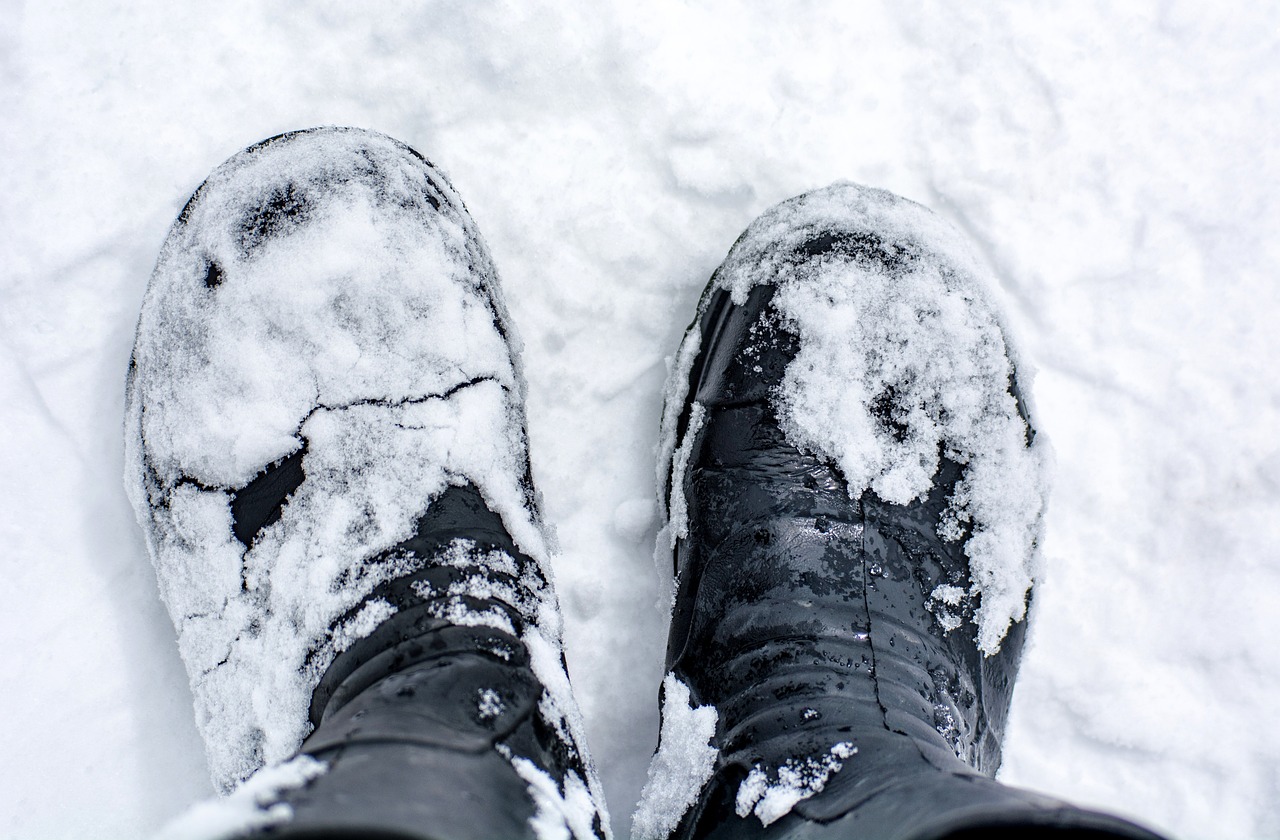
Walking in winter: what should you have on your feet?
Central Rovaniemi can be covered entirely on foot. The museums, the restaurants, the bus station and the main stop all sit within a few hundred metres of each other.
The about 8 km out to the village, on the other hand, is a bad idea between November and March. Two hours of walking in the dark, along a snowed-up verge, in deep cold, is nobody's idea of a good time.
The city clears snow and grits its pedestrian routes according to three maintenance classes. The central streets are cleared regularly, but cleared does not mean non-slip.
The tourist office is blunt about this: boots with serious grip or clip-on ice grips, no shortcuts, and a slower pace. It is the single best-value tip on this page, and the cheapest.
No local source publishes a price for those ice grips, so buy them before you travel rather than on arrival. The rest of the kit is covered in our guide to what to wear in Lapland.
Two safety rules complete the picture: wear reflectors, effectively compulsory in a country that spends half the day in darkness, and never walk on the river ice. The thickness varies constantly and falling through is fatal.
Is a fatbike a real way of getting around?
Fat-tyred bikes are hired out all year in the town centre, at Nordic Odyssey on Jaakonkatu. The 2025 rate is 60 € for 4 hours, 80 € for 8 hours, and 40 € for each extra day.
Helmet, lock and a basic kit are included, the minimum height is around 155 cm, and a child trailer for under 22 kg is available. The eight kilometres out to the village are easy going on the packed trails.
Our verdict is mixed, and it changes with the season. In December and January, at €80 a day, the fatbike costs more than a small hire car: it is an activity, not a means of transport.
From April to October the reading flips. The trails roll well, the light lasts into the middle of the night, and the bike becomes the most enjoyable way to link the centre to the village.
What does a hire car really cost?
A dozen or so firms share the airport and the town centre: Green Motion, Alamo, Avis, Enterprise, Scandia Rent and Finnrent among the chains, Norrrent, Nolire and Rovaniemi Insider among the local operators. The latter make a point of including studded tyres and an engine block heater cable.
Here is the typical daily grid recorded for 2026 across Lapland, unlimited mileage, basic insurance and Finnish VAT included.
| Category | Summer | Shoulder season | Winter outside the holidays |
|---|---|---|---|
| Small (Yaris, Fabia) | 55 € | 45 € | 70 € |
| Medium (Octavia, Golf) | 75 € | 60 € | 95 € |
| 4x4 SUV | 95 € | 80 € | 130 € |
| 7-seat people carrier | €120 | €95 | 160 € |
| Premium 4x4 | €140 | €110 | 180 € |
Those figures come from a regional guide. A survey specific to Rovaniemi puts an economy car in an ordinary winter closer to €40 to €50 a day, almost half as much. We quote both: the gap mostly measures how early you booked.
December blows the grid apart. Comparison sites show averages of 135 to 210 € per day across all categories, and over the from 15 December to 10 January window a small car goes for €70 to €80 a day.
To gauge the scale: the same car hired in May comes out up to 81 % cheaper than in December. No source, however, publishes a measured gap between booking six months ahead and booking last minute; comparison sites think in months, not in lead times.
The headline price is never the price you pay. Add the excess waiver at 15 to 40 € per day, parking, fuel, and where relevant 40 to 75 € in fees if you cross into Norway or Sweden.
A concrete example, four days in January with a small car. Hire €280, excess waiver €120, parking around forty euros, petrol on top: you are past €450 before turning a wheel.
The same four days by bus cost four 24-hour tickets, so €36, plus two or three evening taxis. The ratio is one to five, and that ratio is what to keep in mind for what follows.
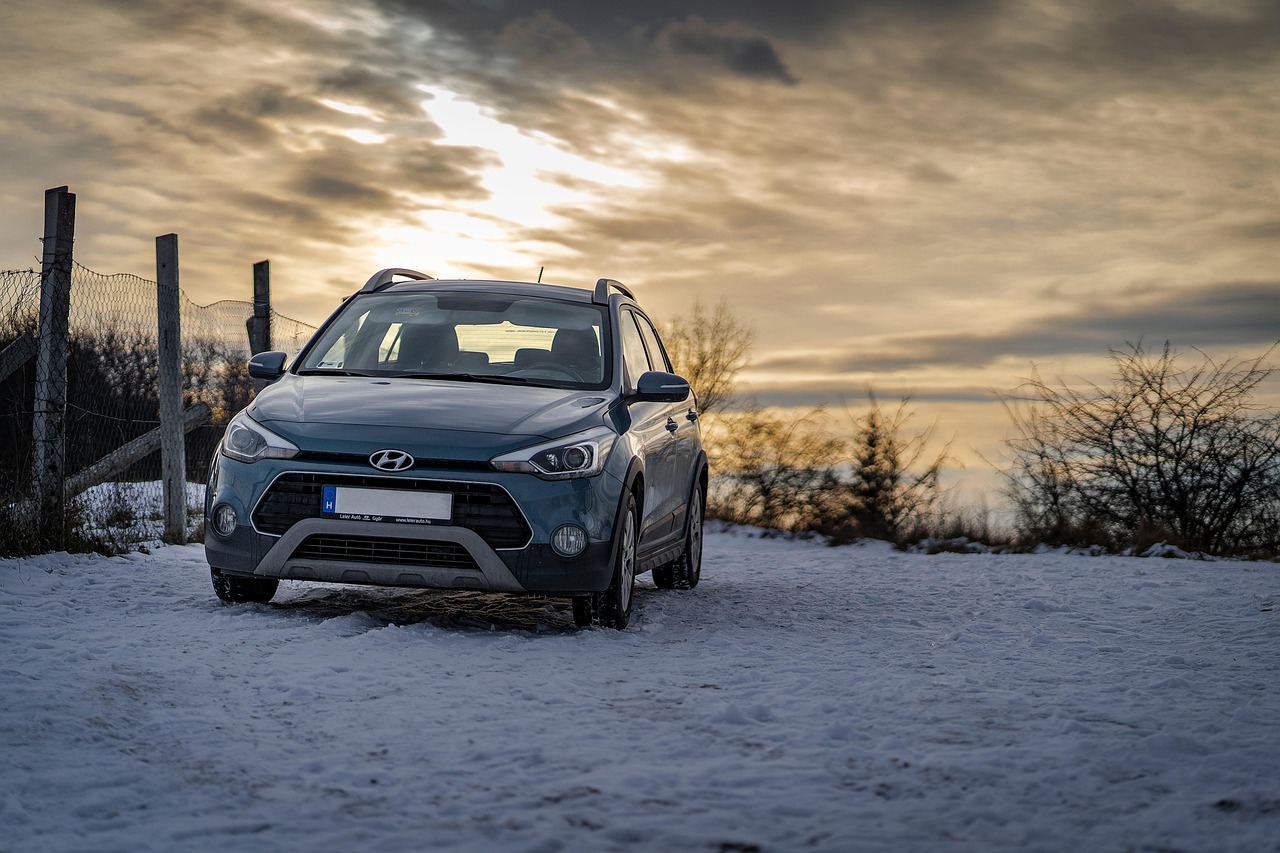
Where to park, and at what price?
Central Rovaniemi is mostly paid parking, at 2 to 2.20 € per hour, 8 am to 6 pm on weekdays and 8 am to 4 pm on Saturdays. The ticket is valid in every paid bay in the zone.
The covered car parks are better value than they look. Sampokeskus charges 1.50 € per hour after a free first hour, 12 € per 24 hours, and the Revontuli shopping centre offers two free hours then 2 € per hour.
Many hotels offer a flat rate of 10 € per 24 hours with the guest card. Over a four-night stay that is €40 added to the bill, a line nobody budgets for when booking the car.
A parking fine is 60 €, payable within thirty days. Free time-limited zones do exist just outside the centre, but no recent source quantifies how far they extend or how long you may stay.
At the airport, if you leave a car while you are away on a multi-day trip, expect 19 to 23 € per day and 77 € a week. The engine block heater socket in car park P3 is charged at 5 € per session.
A word on those sockets, which puzzle every visitor. The posts planted in residential car parks are not self-service: they are reserved for subscribers. A visiting driver plugs in at their hotel car park, or nowhere.
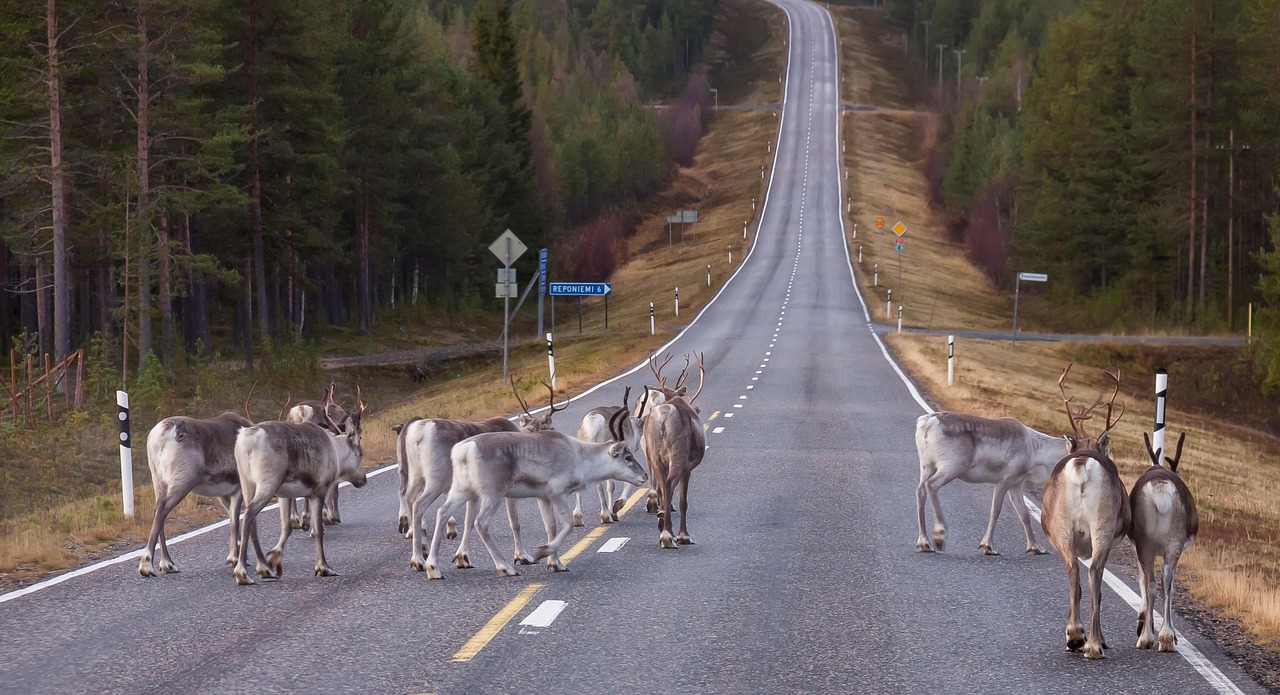
What car hire insurance does not cover, reindeer and elk included
This is the point comparison sites skate over and hire desks explain only at the counter, with a queue building behind you. It is worth five minutes before you book.
The usual excess in Finland runs 1,500 to 3,500 €. Enterprise quotes 2,000 to 4,000 € depending on category, Rovaniemi Insider 2 000 €, and one local firm, Nolire, comes down to 950 €.
Standard cover, meanwhile, excludes just about everything that actually breaks in winter: tyres and wheels, the windscreen and glazing, the underside of the vehicle, the roof, the mirrors, the interior, lost keys and misfuelling.
The underside deserves a pause. A bank of hardened snow, a snowdrift misjudged in reverse, and the sump or the exhaust goes off for a repair costing several thousand euros, entirely at your expense.
Then comes the Lapland question above all others: what happens if you hit a reindeer or an elk? The insurance guides are unambiguous, collisions with wild animals are often explicitly excluded from basic cover.
So the question to ask at the counter, word for word, is this: am I covered if I hit a reindeer or an elk? An evasive answer counts as a no.
Good news on one point: compensation for the animal killed, 1,200 to 1,800 € per reindeer, is paid by the Finnish Motor Insurers' Centre, including for a foreign driver. You do not pay for the reindeer, you pay for your car.
In return, two obligations. You must report the collision, both to the hire company and to the reindeer herding district concerned, otherwise the claim becomes contestable.
There is a way round it, and it has a price. Enhanced cover at 15 to 25 € per day removes the excess and includes glass, tyres and animal collisions. Rovaniemi Insider offers a package at 30 € per day that brings the excess to zero, with the deposit cut to €200.
On a four-day hire that is €60 to €120 more. It is expensive, and it is still the one line on the bill we would never tell you to cut in Lapland.
Driving in winter: what actually changes
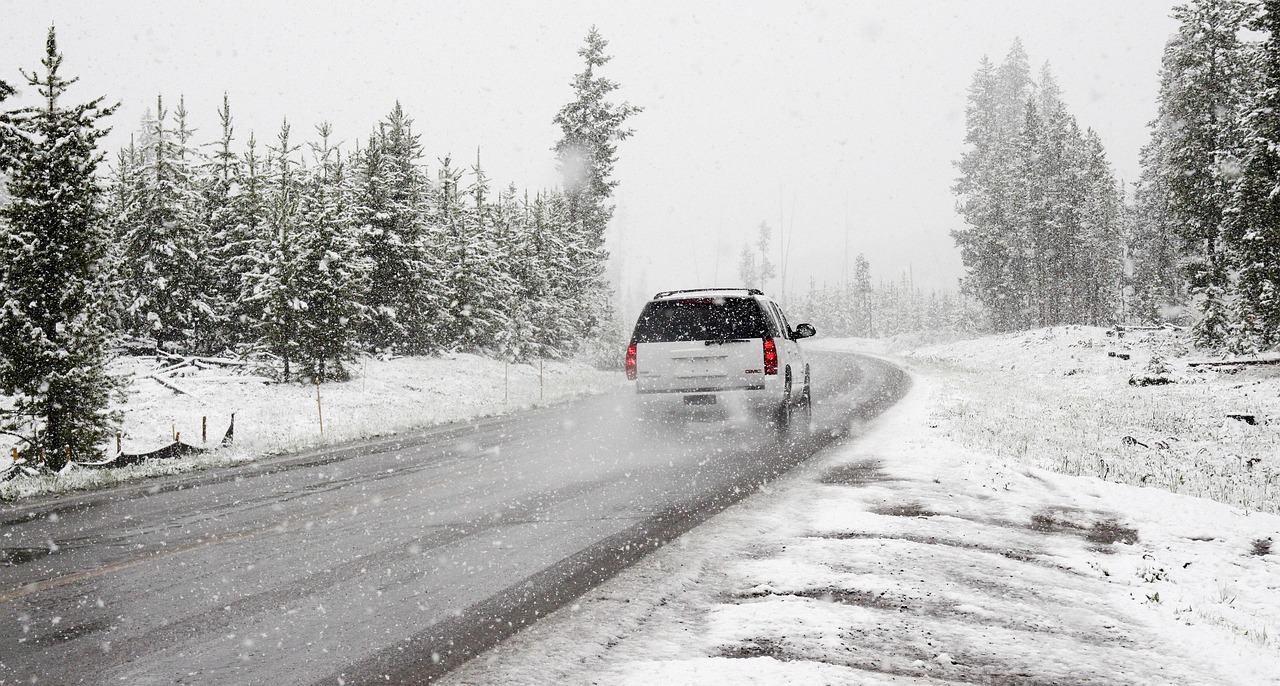
Winter tyres are compulsory from 1 November to 31 March whenever conditions require them, with a tread depth of at least 3,0 mm. Studded tyres are permitted over the same window.
The law makes no exception for hire cars: every vehicle hired in Rovaniemi in winter is fitted, at no extra charge, most often with studs. Be wary of marketing sheets, though: some still quote the old 1 December to 1 March period, which predates the 2020 reform.
Road salt is the subject of a stubborn misunderstanding. The main roads around Rovaniemi are cleared, gritted and sometimes salted continuously, but Lapland salts very little, and many minor roads are not salted at all.
So you drive on a crust of compacted snow, where the grip comes from the studs rather than from the tarmac. It is surprisingly safe, provided you accept speeds below the posted limits.
Local recommendations are specific: 70 to 80 km/h on packed snow, 60 to 70 km/h in the black ice window between -1 and -5 °C, and always under 60 km/h in reindeer country after dark.
Add the darkness. In December and January the day offers three to four hours of weak light, which means most of your driving will be done at night or in half-light.
A blizzard drops visibility to 50 m, and valley fog is common between -10 and -20 °C. These conditions do not last all winter, but they can land on any one of your days.
Finally, the reindeer. They move in groups and have no sense of danger: if one crosses in front of you, slow right down, there are more behind it.
Does an electric car cope with extreme cold?
The question comes up more and more as hire fleets switch over. The honest answer is: yes for Rovaniemi, caution everywhere else in Lapland.
Real-world measurements show a range loss of 25 to 40 % against manufacturer estimates in winter, and 30 to 45 % at -20 °C and below. An advertised 400 km becomes 240 km, sometimes less.
Two habits limit the damage. Plug the car in every night, hotels and car parks generally offering AC at 7 to 11 kW, and preheat the cabin and the battery while it is still on the socket.
Preheating on mains power gains 15 to 20 % of usable range compared with setting off on a cold battery. It is free and almost nobody does it.
Where electric becomes a gamble is on the long roads north. There are only four charging points over 330 km between Rovaniemi and Utsjoki, one of them intermittently out of service since 2024.
The commonly accepted rule is never to set off further than 200 km in winter without charging to 100%. For a loop around Rovaniemi, no problem at all. To head up to Inari, take a petrol or diesel car.
So, should you hire a car?
Here is our position, stated plainly, after lining up all the numbers side by side.
No, in these cases:
- A two to four day stay built around the town, Santa Claus Village and guided activities. Everything is served, and the excursions come and collect you.
- Travelling during the from 15 December to 10 January window, when the car costs the most it will all year and spends the day parked.
- A couple or a solo traveller: two bus tickets against €70 of car hire, the sum does itself.
- A driver who is uneasy on snow. A hire that goes wrong costs more than a taxi, excess included.
Yes, in these cases:
- Chasing the northern lights independently over several nights. The last bus goes at 19 h 35, and the lights show up after that. See where to watch the northern lights around Rovaniemi.
- A wider loop out to Ranua, Pyhä-Luosto or Saariselkä, where buses thin out fast.
- A family of four or five making several journeys a day: five 24-hour tickets at €9 make €45 a day, which is closing in on the price of a small car.
- Isolated accommodation, off the regular routes and with no shuttle included.
- A stay outside the winter season, when the shuttles and tourist buses stop running.
One case deserves numbers rather than instinct, and that is the northern lights. A dedicated bus leaving from the centre costs from 79 € for three hours, where two nights of car hire already cost more, excess included.
The distinction that matters: in Rovaniemi a car does not buy you transport, it buys you freedom over the clock. If your days run between 06:00 and 19:30, you are paying for a freedom you will not use.
The direct alternative to a day of car hire: a car hired in January comes to 70 € a day, excess and parking excluded, to go where an excursion already takes you. Activities in Rovaniemi with transport included leave from the centre or from your hotel and bring you back, which settles the 19:35 last-bus problem at the same time. On a short stay, it is the most rational sum you can do.
See excursions leaving from Rovaniemi →Affiliate links: booking through them supports the site at no extra cost to you.Your hotel address is your first mode of transport
This is the decision that weighs most heavily on your travelling, and you take it months before you arrive. A hotel in the centre puts the restaurants, the museums and the route 8 stop within a ten-minute walk.
Accommodation out on the edge turns every evening out into a €20 or €30 taxi ride. Three evenings like that and you have paid the equivalent of a day of car hire without any of the flexibility.
The right instinct when booking is to look at the real distance to Ruokasenkatu, not at the rating or the photos. Compare places to stay in Rovaniemi and where they sit in the town before you commit to anything.
What we could not verify
Several elements of car hire remain opaque in Rovaniemi, and we would rather write that down than copy across ballpark figures taken from somewhere else.
- Additional driver, young driver and child seat fees are not priced by any published local source.
- One-way fees between Rovaniemi and another Finnish city are no better documented. Only cross-border trips carry a published charge.
- The gap between booking six months ahead and booking last minute in December is not published in any robust form.
- The exact extent of the free time-limited parking zones is documented nowhere.
- Uber and Bolt availability is the subject of contradictory sources in 2026.
To put numbers on the rest, read our estimate of what a trip to Lapland costs, where the transport line is broken down item by item. And remember that the big local activities, husky sledding first among them, almost always include the transfer from the centre.
Available places to stay, with their prices. Stay22 compares the booking platforms.
Partner map: booking through it supports the site at no extra cost to you.
Sources
Linkkari and Waltti for zone A fares and ticket types. Visit Rovaniemi for the official route 8 and 8C timetables, 2026-2027 season. Airportbus.fi for the Airport Express and Santa's Express shuttles. Traficom for winter tyre regulations.
Enterprise, Nolire, Rovaniemi Insider, Norrrent, Avis and Hertz documentation for excess levels and winter equipment, 2022 to 2026 editions. Car hire comparison sites for the 2024-2026 seasonal averages.
City of Rovaniemi and Finavia for parking. Reindeer Herders' Association of Finland for collision compensation, 2025 document. Nordic Odyssey and Kotatieva for fatbike hire and the park shuttle. Data verified in August 2026.
Frequently asked questions
Do you need to hire a car in Rovaniemi?
How do you get from the centre to Santa Claus Village without a car?
How much does the bus cost in Rovaniemi?
Are there evening buses in Rovaniemi?
Does car hire insurance cover a collision with a reindeer?
Are winter tyres included with a hire car in Rovaniemi?
Can you park for free in Rovaniemi?

Erik Lindqvist
Based in Rovaniemi, Erik knows the difference between a working reindeer farm and a show staged for coach parties. He writes from the ground, not from a press release.