Lapland with kids: age limits, suitable activities and budget
The cold does not just dictate the packing list, it dictates the programme. Minimum ages activity by activity, the day that actually holds together, and the full sum for four.
The question that decides the trip is not "which operator" or "which hotel". It is "at what age is this worth doing", and almost nobody answers it straight.
The second question arrives once you are there, usually on day two. A five year old sitting still in a sledge at -10.2°C lasts far less time than an adult who is walking, and a day planned around two excursions ends in tears before the second one.
This page gives the minimum ages activity by activity, the rhythm of a day that actually holds together, what to do about naps and meals when darkness falls mid-afternoon, and the complete budget for a family of four.

What age is a Lapland trip actually worth it?
Family travel guides agree on a floor of 3 to 4 years old, and most advise waiting until 4 to 5 years old for a child to get real value out of the outdoor activities. The core age band is 4 to 10 years old.
Under four, the destination is not the problem. Finnish families go out with babies, and infants of 4 to 6 months ride in reindeer sleighs on very short loops.
The problem is three things at once: hard cold, long stretches of sitting still, and the polar night. Together they turn a magical trip into an exhausting one, for the child and for the parents.
On the magic itself, the window is narrower than people expect. It peaks between 3 to 7 years old, then falls away between 8 to 12 years old as soon as a child starts to doubt the man in the red suit.
| Age | What works | What goes wrong |
|---|---|---|
| 0 to 3 | Nothing specific. The trip is really for the parents. | Cold, sitting still, polar night, it all stacks up. |
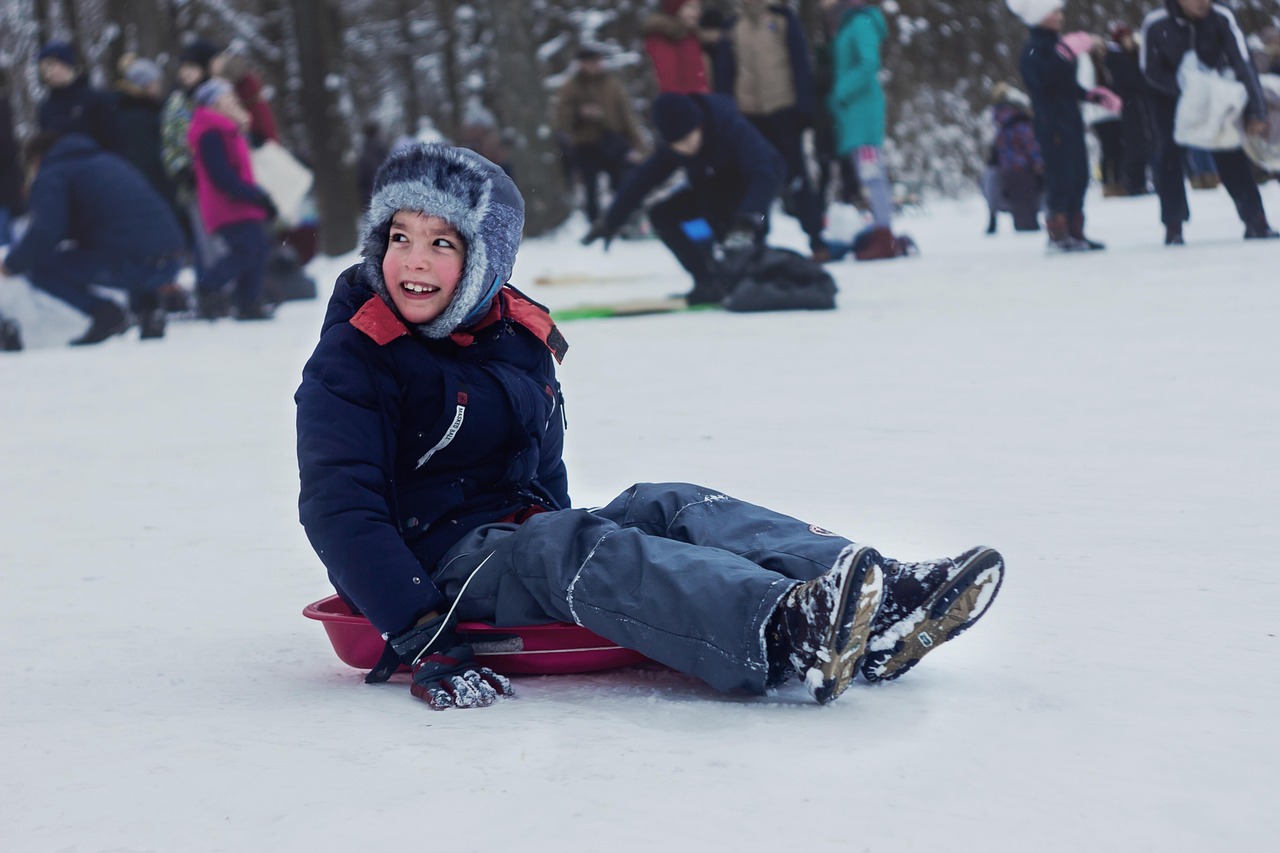
| 3 to 5 | Santa, reindeer, sledging, free play in the snow. | Any outing over 20 minutes spent sitting down. |
| 5 to 8 | The sweet spot: short husky runs, Santa, the indoor parks. | Long safaris and snowmobile trips lasting several hours. |
| 8 to 12 | Huskies, reindeer, northern lights, snowmobile in a towed sledge. | Santa himself, who becomes one visit among several. |
| 12 and over | Driving a team, long outings, late aurora hunts. | A programme built around Christmas, which reads as childish. |
Santa Claus Village works very well for the 3 to 10 band, and we cover elsewhere what it is really worth, what is free there and what is not. Read our assessment of Santa Claus Village before you build the trip around it.
What the cold dictates, and what no itinerary mentions
An adult on the move handles an hour outside without difficulty. A child sitting in a sledge produces no heat at all, and that is exactly the position most of the activities on sale put them in.
The local guides' rule comes down to one idea: overlayer. Reckon on one to two extra layers for a young child who will be sitting still, compared with what an adult wears for the same outing.
The rest of the time the opposite applies. A child at play sweats, and sweat chills the moment they stop: that is why cotton is banned as a base layer, on a child even more than on an adult.
The warning signs are well documented and simple: white hands, a painful face, unusual tiredness. They always come before the meltdown, and they come faster than the return to the warm that you had planned.

It is the extremities that decide how long an outing lasts, not the coat. Our page on what to wear in Lapland sets out the layering system, the boot ratings and what operators actually lend you. For what -13.5°C as a January low really feels like, see the temperatures month by month.
One cost goes unmentioned everywhere: the time spent getting dressed. Kitting out two children from base layer to mittens, then stripping them down again on the way back, happens four to six times a day and wears on morale as much as the cold does.
Which activities have a minimum age or height?
This is the hardest information to gather before you book, because every operator sets its own thresholds and some publish them nowhere. Here is what cross-checked sources allow us to establish.
| Activity | Threshold | Format that works |
|---|---|---|
| Husky sledding, as a passenger | 3 to 4 years old | 2 to 5 km, i.e. 8 to 20 minutes for 4 to 8 years old |
| Husky sledding, long run | 8 and over | 6 to 10 km, i.e. 45 to 60 minutes |
| Driving your own team | 12 years old | After training, supervised, at certain operators only |
| Snowmobile, driving | 18 years old with a valid driving licence | Breath test possible before departure |
| Snowmobile, child under 1.40 m | 2 to 4 years old depending on the operator | In a sledge towed by the guide's snowmobile, never on the machine |
| Snowmobile, passenger behind an adult | 1,40 m, i.e. 13 to 14 years old | Varies between operators |
| Reindeer sleigh | All ages | 5 to 10 minutes, 15 at most for a child not used to it |
| Free sledging | 2 years old, with an adult | Parental supervision required on the slopes |
| Ice fishing | Dedicated child rate | 60 to 69 € per child against 89 to 100 € per adult |
| Ice floating in a survival suit | 14 years old, 150 cm and 120 kg maximum | Out of reach before the teenage years |
| Fatbike | 155 cm | Same again |
| SantaPark | Free under 3 | 37 to 54 € per child aged 3 to 12 |
Two things come out of that table. First: under six, the only motorised activity that genuinely works is the towed sledge, and even then only on a short outing.
Second: the reindeer sleigh is the only activity with no age floor at all. It is slow, it is quiet, it asks nothing of the child, and it can stop after five minutes if the cold is winning.
The outing that works at every age: almost everything imposes an age or a height, except the reindeer. It is the only activity a three year old and a ten year old do together, and the only one that can stop after five minutes without anyone losing out. The reindeer sleigh rides around Rovaniemi state the actual riding time, the only figure that matters here.
See the reindeer sleigh rides →Affiliate links: booking through them supports the site at no extra cost to you.Riding time is in fact where the farms differ most. We compared the real distances, from 500 metres to 2.5 km depending on the operator, on our page about the reindeer farms near Rovaniemi.
What disappoints, and at what age?
The same disappointments come back in every traveller's account, and they are all predictable. The first is the snowmobile trip that runs too long: several hours sitting still in a sledge at -20°C is hard going for a child under six or seven.
The second is the 6 to 10 km, i.e. 45 to 60 minutes husky safari booked for a four to seven year old. What was meant to be the highlight of the trip becomes too long and too cold, exactly at the point where turning back is no longer an option.
The third is the queue to see Santa in December, put at 1 to 3 hours by some guides and at 60 to 90 minutes in the afternoon by others. The sources disagree, but none of them goes below an hour in peak season.
The fourth catches out the parents more than the children: the polar night itself. Some children are genuinely unsettled by a day that never fully lights up, and guides recommend explaining the phenomenon to them before you leave.
Then there are the older ones. Between 8 to 12 years old, Santa no longer carries the trip on his own, and the budget has to shift towards the huskies, the reindeer and the northern lights, which work at any age.
How do you avoid a three hour queue with young children?
Three solutions exist, and their cost for a family of four is never laid out side by side. The first is free. Santa's Office opens 8am to 8pm in peak season, and the queue is short at opening and again after 3pm, once the coach groups head back to town.
The second is the private meeting at the village, charged at €500 per family of up to eight, for ten minutes of which five are one to one. Split across four people it is expensive, but the price does not move if you are six or eight.
The third moves the meeting out of the village and into the forest. Apukka Resort charges €149 per adult and 99 € per child for 2 hours, so 496 € for two adults and two children, transfers, reindeer and workshop included.
The Joulukka programme, further upmarket, asks €269 per adult and 229 € per child for 3.5 hours, transfers included, so 996 € for the same family. At that level it is the heaviest line of the trip after the flights.
Our advice is simple: these formats only make sense on a visit locked into late December, with children too young to stand the queue. The Santa meetings and Christmas activities around Rovaniemi should then be compared on actual face to face time, not on the setting. The alternatives are set out in full on our page about SantaPark and the quieter venues.
What does a day that actually holds together look like?
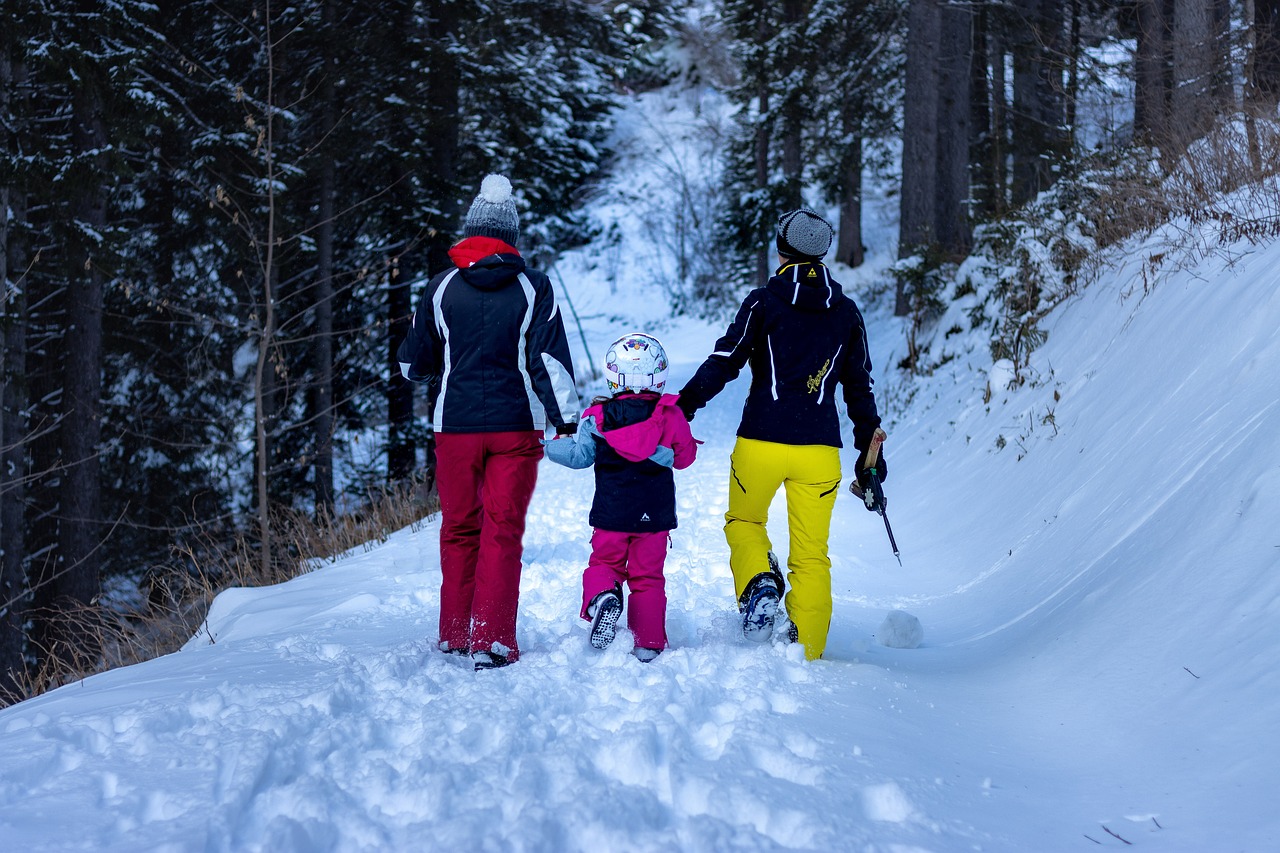
Itineraries tested in real conditions all converge on the same shape, and it is gentler than what the brochures sell: one organised activity of 2 to 4 hours, plus one short free outing.
The rule that matters is this one: one big outdoor outing per day under the age of eight. Past two activities, the dressing time, the transfers and the cold send tiredness through the roof.
If you are going out on a charter day trip from a regional airport, all of this compresses into a few hours on the ground, a different exercise entirely, and one our page on Lapland package holidays covers in full.
The morning takes the organised activity, because that is where the light is. The afternoon takes the trip back to the accommodation, quiet time, and one short free outing, sledging or a snowball fight outside the door.
The daylight constraint is pure arithmetic. On 1 December, Rovaniemi gets 3 hours 47 minutes of daylight, which leaves room for one activity and nothing else. On 1 March, 9 hours 53 minutes leaves real slack.
That is the first concrete argument for February and March with children, and we come back to it below. The month by month detail is on our page about when to go.
How do you handle naps and meals when it goes dark at 2pm?
No guide publishes a nap protocol for Lapland, and it is more honest to say so than to invent one. What is documented is three constraints that collide, and a running order can be deduced from them.
First constraint: Lapland is one hour ahead of France, which puts it two hours ahead of the UK. Darkness at 2pm is midday on the body clock of a child who has just landed from Britain, which shifts lunch and the nap on its own.
Second constraint: the window of daylight and the lunch hour are the same thing. A restaurant meal at noon eats the only usable slot of the whole December day, which argues for lunch late, or light, or back at the accommodation.
Third constraint: price. Finnish lunch, the lounas, has a median of €13.75, while dinner out costs 30 to 50 € a head. For four, two meals out a day clears 175 € daily.
What follows is the pattern families on the ground actually use. Breakfast in, activity in the morning, a late lounas or a picnic, quiet time after that, an early dinner cooked at home, then an aurora outing for whoever is still standing.
The supermarkets accommodate that rhythm without difficulty: the Prisma in Rovaniemi opens 8am to 11pm Monday to Saturday. A kitchen in your accommodation is not a luxury with children, it is the central piece of both the budget and the timetable.
Where should you stay with children?
The guides converge on a cabin or a chalet with a kitchen, for three reasons of which only one is financial: cooking, drying soaked kit, and settling between two outings without getting back on a bus.
Budget cabins sit between 55 to 120 € a night, and a 2026 source indicates that most of them have a kitchen and a sauna. A flat in town runs closer to 100 to 120 €.
Be careful about the sauna specifically. In most Rovaniemi hotels it is shared, sometimes with separate slots, and a private sauna remains the preserve of cabins and igloos. Never assume it, check it on the listing.
The same goes for interconnecting rooms. No public source lists which Rovaniemi properties offer them, and the standard Finnish format is the family room or the cabin, not two rooms joined together.
Two filters decide everything, and they are the ones a cabin listing answers while a hotel listing stays vague: the kitchen, and real sleeping space for four. Compare family accommodation in Rovaniemi on those two points first, and the sauna second.
That leaves the choice between Santa Claus Village and the town centre. Staying at the village removes the journeys and keeps the atmosphere going all day, but costs 20 to 30% more for the same standard.
The centre keeps one decisive advantage with children: restaurants, shops and bus 8. That bus sets its own constraint in the evening, with a last return from the village at 19 h 35 on weekdays and 18 h 05 at weekends. The full comparison is on our page about where to stay in Rovaniemi.
How much does a week cost for a family of four?
No source publishes a family budget for Lapland, and that is exactly what is missing when you come to decide. The table below rebuilds the sum line by line, from rates surveyed in 2026.
The assumption is this: two adults and two children, five days and four nights in February, a cabin with a kitchen, three paid activities and the official photo with Santa.
| Line | How it is worked out | Total for four |
|---|---|---|
| Return flights | 250 to 550 € per person outside December | 1,000 to 2,200 € |
| Accommodation, 4 nights | Cabin with a kitchen, 55 to 120 € a night | 220 to 480 € |
| Husky sledding | 60 to 63 € per adult, 50 to 52 € per child | 220 to 230 € |
| Reindeer farm | 70 to 130 € per person, child rate rarely published | 280 to 520 € |
| SantaPark | 42 to 62 € per adult, 37 to 54 € per child | 158 to 232 € |
| Photo with Santa | 30 to 55 € once for the whole family | 30 to 55 € |
| Meals | One lounas a day at €13.75, the rest cooked, groceries at about 10 € per person per day | about 475 € |
| Local transport | 7 to 10 € per person per day, half price for children | 140 to 200 € |
| Clothing hire | 0 € if the activities lend it, otherwise 80 to 100 € for 3 to 7 days per child | 0 to 480 € |
| February total | 2,500 to 4,900 € |
Three remarks on that sum. The reindeer farm is the one line where child rates are not published consistently, so the top of the range assumes the full adult price for everybody.
Meals are the line that moves fastest. Two restaurant meals a day for four would cost between 875 and 1,275 € over five days, against about 475 € with a kitchen, which is the price of a return flight.
December changes the scale, not the structure. Flights go to 700 to 1,000 € per person, accommodation and activities rise by 50 to 100%, and the same trip comes close to double.
Is a package holiday better value for a family?
The comparison is worth making, because the answer is not obvious. A mid-range package costs 1,600 to 2,200 € per adult, with a child discount of 10 to 20%.
For a family of four that puts the package between 5,800 and 8,400 €, against 2,500 to 4,900 € doing it yourself. The gap is real, but it is not comparing like with like.
The package includes the flights, the transfers, the accommodation, several activities and usually the loan of arctic clothing for the whole stay. With children it also removes the organising, which is worth something the table does not price.
Our comparison sets out what each operator genuinely includes: see package holidays and the tour operators compared before you decide. For the lines that are not family specific, our page on what a trip costs goes through each one.
Which month should you choose with children?
The family specialists are unanimous and recommend February and March. Three reasons stack up, and none of them is a matter of taste.
Daylight first. Nine hours fifty three minutes on 1 March against three hours forty seven on 1 December completely changes what you can fit into a day with children.
Snow next. Cover reaches 84 cm in March against 41 cm in December, which makes all the difference for sledging, free play and the sledge trails.
Price last. A five day trip goes from 1,300 to 2,000 € in December to 800 to 1,500 € in February, per person, and the queue at Santa's Office collapses.
December keeps one argument, one only, and it is a legitimate one: it is the single month that delivers the Christmas atmosphere. If your children are 3 to 7 years old and that is the point of the trip, accept the price and the short days, and read how to go about meeting Santa without queueing for three hours.
Should you buy or hire children's kit?
Hire, in almost every case. A child grows between two winters, and an arctic outfit bought for a single trip will not be worn again.
Rovaniemi hire firms cover children's sizes from 80 cm to 1.60 m, from toddler to teenager. Reckon on 80 to 100 € for 3 to 7 days for a suit, boots and gloves.
Another operator offers complete sets in sizes 80 to 130 cm, with suit, mittens, boots and neck warmer, over periods of one to ten days with collection in store.
Before you pay for anything, check what your activities include. Most serious operators lend the arctic suit and the boots for the duration of the outing, helmet and balaclava included on snowmobile trips.
What you need to bring from home is a short list and it gets reused: merino base layers, a fleece, a hat, a neck warmer and woollen socks. The costed detail is on our page about what to wear in Lapland.
The four day plan that works
Here is the outline followed by itineraries tested with children of six and nine, alternating busy days and quiet ones.
- Day 1: arrival, settling in, sledging and free play outside the accommodation. Nothing organised, while bodies absorb the cold and the time change.
- Day 2: Santa Claus Village in the morning at opening, back to the accommodation in the afternoon. One thing on the programme, and it takes the day.
- Day 3: first husky ride on a short loop in the morning, quiet time, then the sauna at the end of the day.
- Day 4: reindeer farm or an indoor park, depending on the weather and on how tired everyone is. That one gets decided on the morning, not three weeks ahead.
The principle is to keep a day in reserve. A day at -25°C or a child running a temperature cancels an outing, and a programme filled to the brim does not forgive it.
To choose between activities by age and by budget, our comparison of everything there is to do in Rovaniemi gives the surveyed durations and prices. On the dogs in particular, see our page on husky sledding, which also covers animal welfare.
Sources
Minimum ages and daily rhythm: specialist family guides to Lapland, laponie-trip, monde-authentique, chouetteworld, travelbase, timetours-voyages and voyagesetenfants, surveyed 2025-2026. Children's hire sizes and rates: Arctic Attitude, Nordic Odyssey and Winterent.
Private Santa meetings: Apukka Resort and Santa Claus Secret Forest. Park pricing: SantaPark and Visit Rovaniemi. Temperatures and snow: Finnish Meteorological Institute, Rovaniemi station 101920, 1991-2020 normals.
Meal and local transport prices: LounasOpas, Numbeo and Rovaniemi on a Budget. Data verified in September 2026.
Frequently asked questions
What age should you take a child to Lapland?
Which activities are open to children under 6?
How many activities can you plan per day with children?
Which month is best for Lapland with children?
How much does a Lapland trip cost for a family of four?
Should you buy or hire children's arctic clothing?
Is Santa Claus Village worth it for a 10 year old?
Erik Lindqvist
Based in Rovaniemi, Erik knows the difference between a working reindeer farm and a show staged for coach parties. He writes from the ground, not from a press release.