Husky sledding in Rovaniemi: formats, prices and dog welfare
Between the 2 km loop where you sit as a passenger and the 18 km safari where you drive, the price runs from €60 to €300. The formats compared, and the one criterion nobody advertises: the state of the dogs.
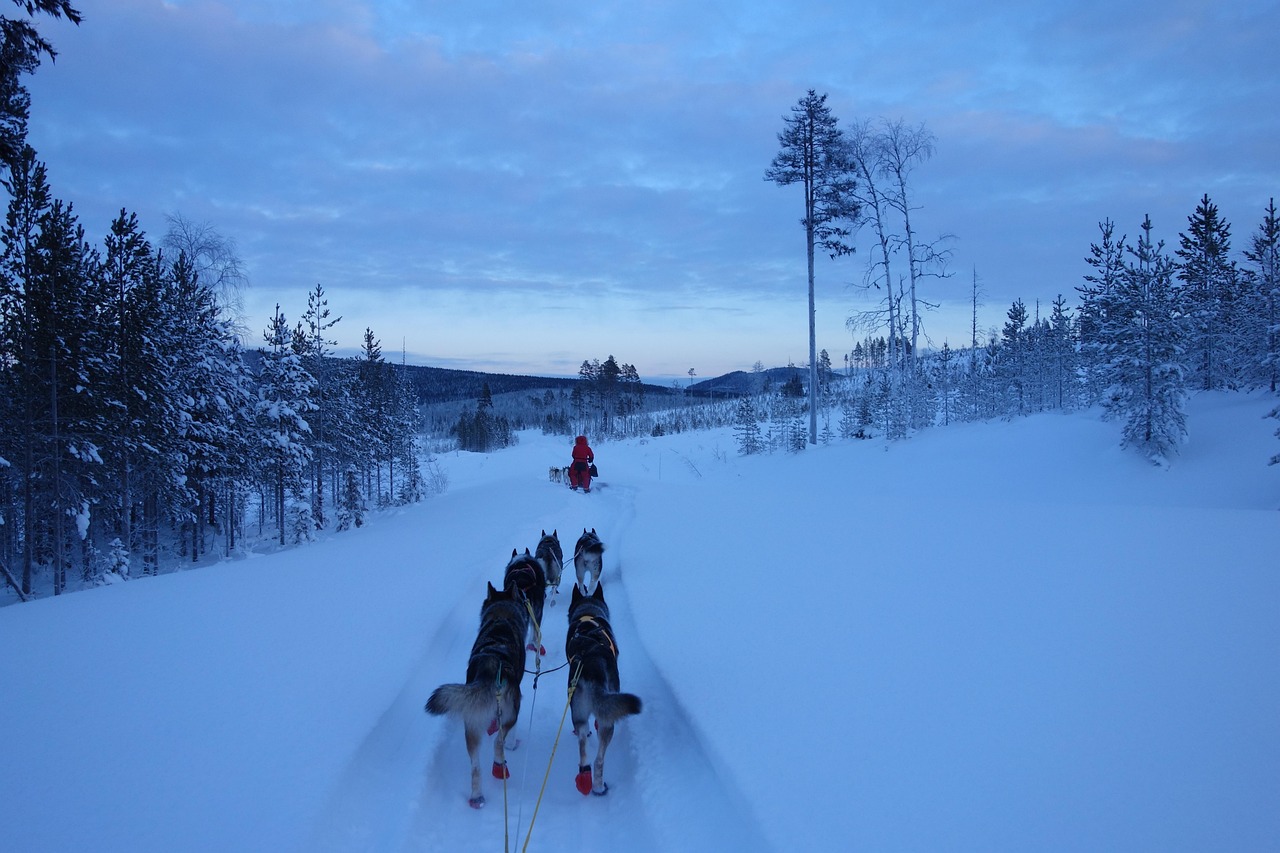
Husky sledding is the best selling activity in Rovaniemi. It is also the one where two travellers can pay 60 to 65 € and 200 to 300 € for two things that carry the same name on the leaflet.
The gap is not random. It comes down to three variables that the product pages never put side by side: the distance actually covered on the sled, whether you drive or sit, and the time spent at the kennel.
This page compares the five existing formats on those three criteria, with the prices recorded for the 2025-2026 season. Then it deals with the subject everything else depends on: the conditions the dogs you are about to run live in.
The five formats, from the 2 km taster to the full day
Rovaniemi's specialist guides sort the market into five categories. The column that matters most is not the price, it is the one about driving.
| Format | Distance | Time on the sled | You drive | Adult price |
|---|---|---|---|---|
| Taster ride at Santa Claus Village | 2 to 2.5 km | 8 to 12 minutes | no, the guide drives | 60 to 65 € |
| Short safari | 5 km | 15 to 25 minutes | yes | 110 to 190 € |
| Standard safari | 6 to 10 km | 30 to 50 minutes | yes | 145 to 200 € |
| Extended safari | 12 to 18 km | 60 to 90 minutes | yes | 200 to 300 € |
| Husky and reindeer or snowmobile combo | varies | varies | often | 160 to 300 € |
Read the first row, then the third. For three times the price, you go from eight minutes sitting behind a professional to forty minutes standing on your own runners, with the kennel visit thrown in.
Who actually drives the sled?
That is the question to ask before all the others, and the answer is mechanical. The very short tours of 2 to 3 km are guided: you stay seated in the basket and the musher stands behind you.
Every safari of 5 km and above is self drive. The sled takes two people, one standing on the runners, the other sitting, with a swap halfway round on almost every package.
The minimum age to take the runners is 18 years old with most operators, 17 with a handful. It is not a question of difficulty, it is an insurance clause.
A pricing detail that catches out solo travellers: on several packages, driving a sled on your own costs extra, under the name single driving. The advertised price assumes two people per team.
How much does a tour cost, operator by operator?
Here are the prices published by the main kennels and operators in the region for the 2025-2026 season. Prices are per adult, with transfers from Rovaniemi generally included on anything above the taster ride.
- Bearhill Husky, a family farm of around a hundred Alaskan huskies at Sinettä, 30 minutes to the north west. A 2.5 km taster ride at Santa Claus Village at 60 to 65 €, children aged 4 to 11 at 50 to 52 €. The 6 to 10 km Happy Trail, a 2.5 hour programme including 45 minutes of sledding, from €196.
- Wild About Lapland, a city centre operator working with a small kennel 30 minutes away, certified Sustainable Travel Finland and Green Activities. The 5 km Wild Run at 178 to 185 €, the 10 km Husky Forest Escape over 4 hours at €197, the 12 to 18 km Call of the Wild at 229 to 249 €.
- Apukka Resort, a quarter of an hour from the centre and five minutes from Santa Claus Village, certified Green Activities. The 7 to 10 km Husky Adventure over roughly 2 hours, from €129. It is the lowest entry price in the region for a genuine self drive safari.
- Huskypoint, the Käpälämäki farm, a 30 to 40 minute transfer away. The 7 km Husky Favorite, self drive, about 40 minutes of driving, at €193, children aged 3 to 12 at €133.
- StayLapland, at the Kuoksa park on the shore of a frozen lake, around thirty kilometres out. A 5 km safari from €189, and a 6 hour combined husky and reindeer day at 349 to 378 €.
Two things follow. First: for the same time on the sled, the gap between operators rarely exceeds 30 %, so a very low price on a long format should make you suspicious rather than pleased.
Second: booking through a platform costs no more than the kennel's own website, but the platform does not always name the farm that runs the tour. That is exactly the information you need to decide on the rest of this page.
What is included, and what is not
Above the taster ride, Rovaniemi safaris follow a fairly stable standard. Check these four lines on the product page before you pay.
- Transfers from a few points in the centre, often included, sometimes charged extra if your accommodation is more than ten kilometres out.
- The loan of a thermal oversuit for the duration of the activity: full suit, boots and gloves, sometimes a balaclava. It is a real part of the value, worth several hundred euros to buy.
- A hot drink and a snack, usually hot berry juice, coffee and biscuits, sometimes a fire and a grill.
- The kennel visit: 30 to 60 minutes with serious operators, with explanations and time among the dogs.
The Santa Claus Village taster, by contrast, covers the guided ride, a hot drink and not much else. No suit lent, very little time with the dogs, and eight to twelve minutes on the sled.
This format is not a rip off, it is simply misunderstood. Sold as a moment to slot into a day already full at the village, it works. Sold as "husky sledding", it disappoints every time.
How cold does it feel on a moving sled?
No operator publishes a wind chill figure. It can be reconstructed from their own numbers: 5 km in 20 to 30 minutes, or 12 to 18 km in 90 minutes, gives a team running at 10 to 15 km/h.
At that speed, the standard wind chill index, the Environment Canada formula used in weather bulletins since 2001, gives the following values for a team at 12 km/h.
| Air temperature | Feels like on the sled |
|---|---|
| -5 °C | about -10 °C |
| -10.3°C, the January average | about -16 °C |
| -20 °C | about -28 °C |
| -25 °C | about -34 °C |
Two practical consequences. The person standing on the runners warms up by working, the one sitting in the basket does not move and cools twice as fast: they are the one who decides when the tour ends.
Then there are the extremities, which go first. The suit you are lent protects your torso, but the gloves supplied are often too big, and nobody lends liner gloves. Bring your own, plus a second pair of socks.
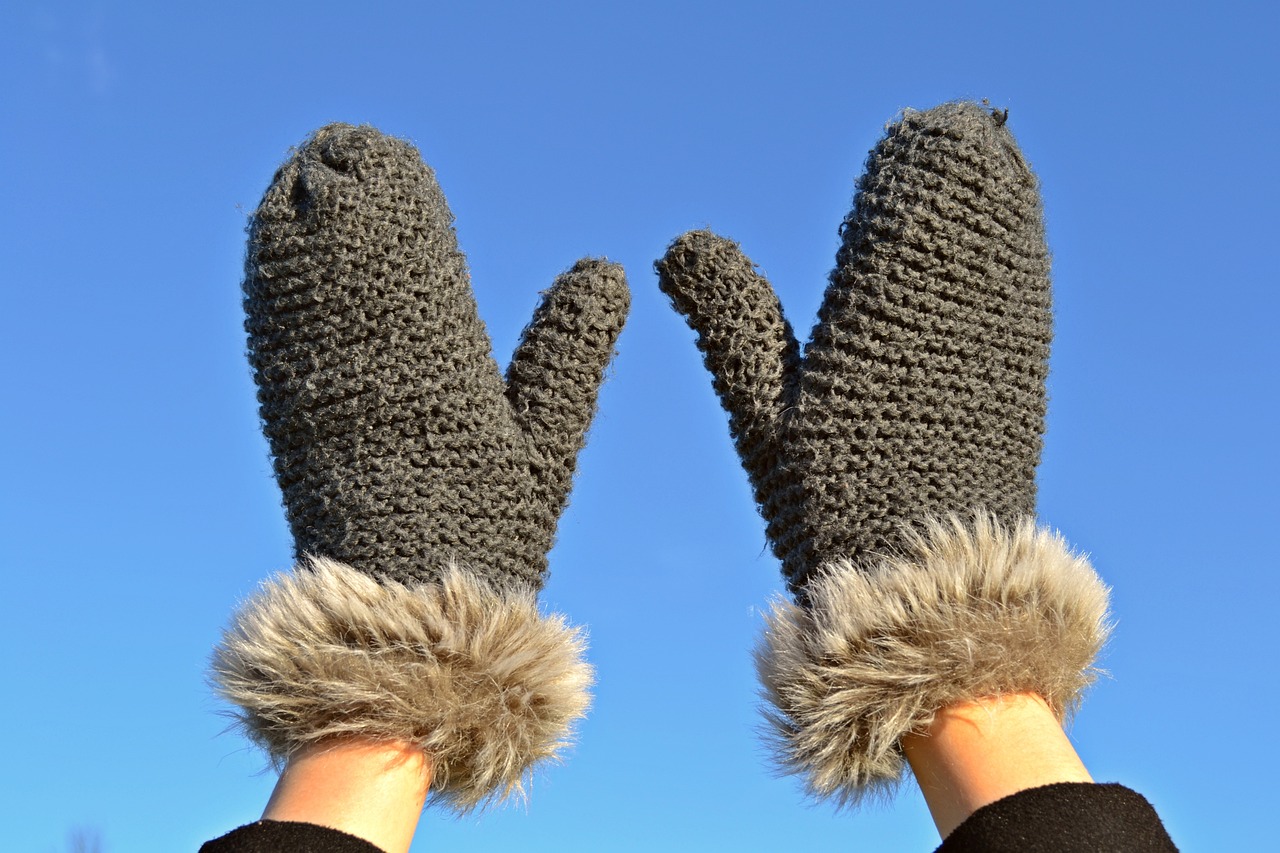
The detail everyone forgets: on the runners, one hand holds the bar and the other stays free. Pulling out a phone at a wind chill of -28 °C costs you the use of that hand for the rest of the tour. Take your photos at the stops.
For the rest of the kit and how cold it gets by season, see our record of temperatures month by month.
What is the minimum age, and does it suit young children?
There are two ages to separate: the age to ride and the age to drive. To drive, it is 18 years old almost everywhere. To ride as a passenger, most operators take children from 0 to 4 years old, often free up to 2 or 3.
The formal answer is therefore yes, from the cradle. The honest answer is different, and it follows from the wind chill line above.
A four year old sitting still in a basket at a wind chill of -28 °C for forty minutes is not having a good time, and has no way of saying so before getting cold. The long safaris are designed for adults who take turns.
The split that works: up to age 6 or 7, the 2 to 2.5 km taster, short, close by, with an immediate return to the warm. From 8, a 5 to 7 km safari. The 12 to 18 km format calls for a minimum of 13 with the operators who run it.
Dog welfare: what the Finnish investigations established
This is the point the brochures leave out, and it is documented. Back in 2019, husky sledding had already overtaken snowmobiling as Lapland's leading tourist activity, with around 4,000 huskies at work against 660 reindeer.
The sector grew faster than its oversight. In 2026, Yle, the Finnish public broadcaster, published a series of investigations based on video and testimony gathered by SEY, the Finnish animal welfare association.
The facts reported are specific: dogs shivering without adequate shelter, animals chained on very short lengths, dirty enclosures. Lapland police opened investigations into several sled dog companies.
The supervising veterinarian for Inari-Utsjoki found shortcomings at around 75 % of the kennels she inspected: chains too short, underweight dogs, insufficient insulation against the cold, untreated teeth and injuries. That area is the far north, not Rovaniemi.
One case went further. A husky safari company was referred to the Northern Finland prosecutor for animal cruelty: malnourished dogs, wounds stapled without anaesthetic, castrations and euthanasia carried out by unqualified staff.
The legal framework does exist. The Finnish Animal Welfare Act 693/2023, in force since 2024, requires access to water and the ability to move and to interact, and it bans electric collars.
For sled dogs, it specifies that they must be watered at least three times a day in freezing conditions and that enclosures must be kept clean. The problem is not the rule, it is enforcement.
SEY sums up the flaw in one sentence: anyone can buy hundreds of dogs and open a kennel. It is calling for a specific licensing regime, joined by the hospitality association Mara, whose director accepts that some companies tarnish the reputation of the rest.
One legal point explains the rest. Researchers and the Finnish NGO PAWWS point out that sled dogs are neither farm animals nor pets. That grey area leaves their fate to general law and to the goodwill of the operator.
How do you tell a decent kennel from an intensive operation?
None of this says you should give up on husky sledding. It says you should choose, and the criteria are known: they come from the official Finnish recommendations and from the Mush with P.R.I.D.E. code of good practice.
- The ratio of dogs to staff. A kennel of 80 to 100 dogs with several trained mushers holds up. Several hundred dogs for a handful of employees is the set up SEY condemns, and the one where PAWWS records that not every dog is fed every day.
- Housing. Insulated boxes with dry bedding and shelter from the wind, rather than dogs mostly outside, on chains, with no enrichment.
- Work rotation. A serious operator can tell you how many runs a dog does per day in high season and which days it rests.
- The retirement policy. Dogs kept on site or offered for adoption, set out in writing. The Hetta Huskies farm, studied in a 2020 university thesis, applies a policy of no convenience euthanasia, with individual health monitoring.
- Transparency. A decent kennel lets you see the area where the dogs live, not just the gang line set up for customers.
Two labels serve as a first filter. Green Activities is presented as the only label in the region whose criteria explicitly cover the welfare of tourism animals: suitable enclosures, health protocol, non violent methods, independent audits.
Sustainable Travel Finland is broader, covering environmental and social matters with an animal welfare component. Neither guarantees zero risk, but a certified kennel has at least been audited by an outsider.
What should you ask before booking?
One email before booking sorts things very quickly. The good operators answer with numbers, often attaching their sustainability plan. The others answer that the dogs love to run.
- How many dogs do you have, and how many permanent mushers are on site in high season?
- How many runs does one dog do per day in December, and how many rest days does it get per week?
- Do the dogs sleep in insulated boxes with bedding, or outside on chains?
- How do you handle watering in freezing conditions, and how often?
- What happens to a dog too old to work? Do you have an adoption programme?
- Are you certified Green Activities or Sustainable Travel Finland, since when, and by which auditor?
- Do you subcontract to other kennels at the December and February peaks?
The last question is the most useful and the least asked. In high season, an operator selling more places than it has dogs hires teams elsewhere, and you will never know whose sled you got on.
What happens to the dogs out of season?
This is the sector's blind spot, and it is worth being straight about what the sources establish and what they do not.
What is documented: as early as 2019, experts were warning about dogs imported temporarily from southern Europe for the season, about inadequate welfare standards, and about dogs euthanised at retirement age.
What is not documented: no public count says how many dogs are involved, or what becomes of the whole population between May and October. The tourist season stops, the dogs stay, and nobody counts them.
Hence the importance of the question about retirement. A kennel that houses its old dogs, or has them adopted with follow up, writes it down and shows you. A kennel that cannot answer that question has already answered it.
What you can see on site, in ten minutes
You arrive at the kennel, the tour has not started, and you have time to look. Four things can be checked without being a vet.
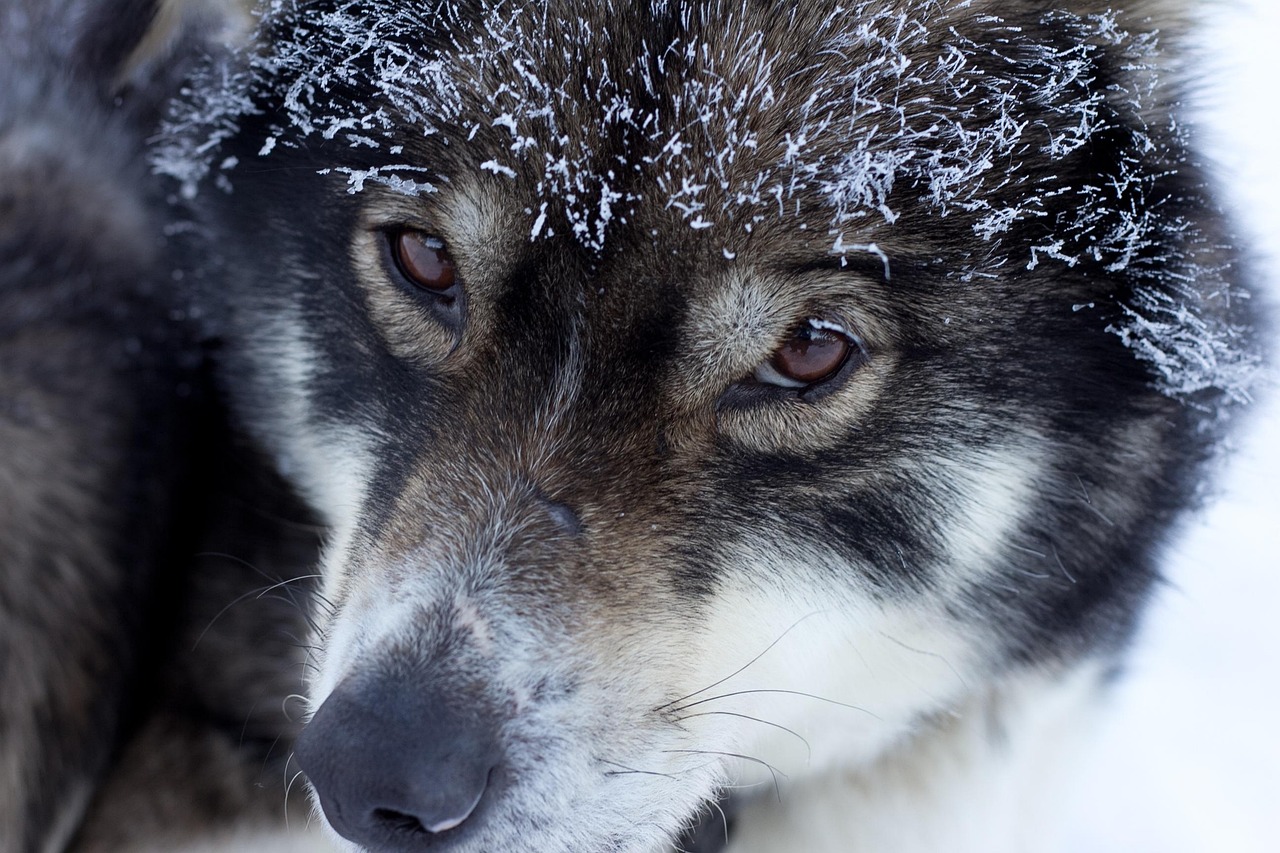
The ribs. A working sled dog is lean, and that is normal. Ribs and vertebrae sticking out on several dogs at once are not.
Tethers and shelters. Look at the length of the chains, and whether every dog has an insulated shelter with dry bedding. A dog that can only take two steps is a warning sign.
Behaviour. Dogs howling and pulling before the off are fine, that is the excitement of the work. Apathetic dogs, hunched, not lifting their heads as you come near, are not.
Access. Ask to see the area where the dogs live, not just the gang line. A polite refusal, a vague answer or a guide who changes the subject counts as an answer.
If what you see is wrong, SEY has opened an anonymous reporting platform for tourists and seasonal workers. That channel is what fed the 2026 investigations.
The format that ticks both boxes: a long safari in a small group, 10 to 18 km, is the best experience for you and the least intensive model for the dogs, since it involves fewer rotations than the 2 km loop repeated all day long. Husky sledding safaris departing from Rovaniemi can be filtered by duration: rule out anything under 30 minutes, then ask for the name of the kennel before you confirm.
See the tours →Affiliate links: booking through them supports the site at no extra cost to you.Which format suits your trip?
- You are coming once and you want to drive: the 6 to 10 km safari, at 145 to 200 €. It is the best ratio of time on the runners to price, and it includes the kennel visit.
- There are two of you, you are keen, and the cold does not scare you: the 12 to 18 km, at 200 to 300 €, with 60 to 90 minutes of actual driving.
- You have children under seven: the 2 to 2.5 km taster at Santa Claus Village, as long as you take it for what it is. Plan it for the same day as your visit to Santa Claus Village.
- You want to see reindeer too: the combined day, at 349 to 378 €, hot meal included. Compare it with the price of reindeer sleigh rides booked separately, sometimes there is no difference at all.
- You want the best trail conditions: February to April, when the snow cover is at its deepest. The detail is in our comparison of which month to choose.
One last budget marker. Plan one husky trip per stay, not two: at these prices, the second costs more than a hotel night, as set out in our estimate of what a trip really costs.
Sources
Rovaniemi Tours' husky safari guide, 2026 update, for the typology of formats and the ages. Product pages and 2025-2026 price lists from Bearhill Husky, Wild About Lapland, Apukka Resort via Visit Finland, Huskypoint and StayLapland for prices and durations.
Yle investigations from 2026 based on the records of the SEY animal welfare association, relayed by Eurogroup for Animals, for the shortcomings found and the legal follow up. CNN report of October 2019 for the number of working dogs and the warnings from researcher José-Carlos García-Rosell, University of Lapland. Blog of the Finnish NGO PAWWS for the legal status of sled dogs.
Finnish Animal Welfare Act 693/2023, presented by Kennelliitto, and the official Animal welfare in tourism services guide, which draws on the Mush with P.R.I.D.E. code. University of Padua thesis, 2020, on the Hetta Huskies farm. Green Activities and Sustainable Travel Finland standards.
Temperatures from the Finnish Meteorological Institute, Rovaniemi station 101920, 1991-2020 normals. The wind chill values are calculated by us with the Environment Canada wind chill index, from speeds derived from the distances and durations published by the operators. Data checked in August 2026.
Frequently asked questions
How much does a husky sledding tour cost in Rovaniemi?
Do you drive the sled yourself?
Is husky sledding suitable for young children?
Is it very cold on a moving sled?
How can you tell whether a kennel treats its dogs properly?
Is there really a mistreatment problem on husky farms?
Do you need to bring your own thermal suit?
Erik Lindqvist
Based in Rovaniemi, Erik knows the difference between a working reindeer farm and a show staged for coach parties. He writes from the ground, not from a press release.